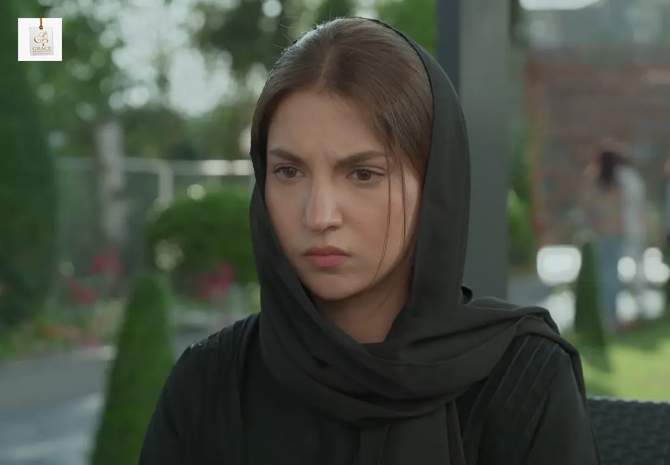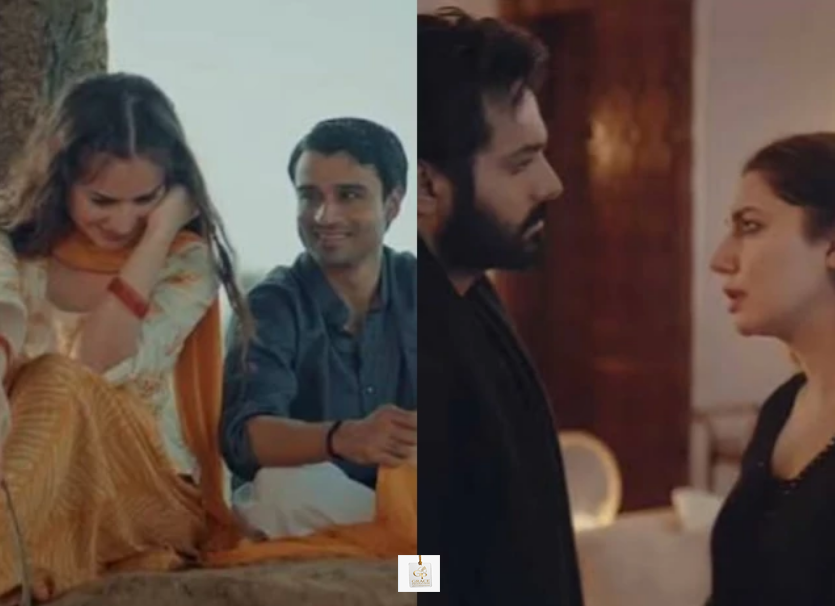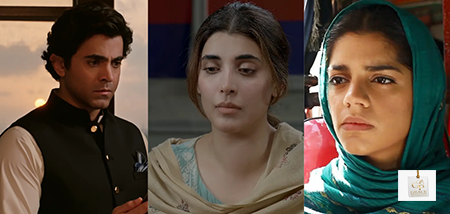
The best-selling novelist and successful playwright has built a reputation by selling romantic stories that appeal to middle-class tastes.
By Mahnoor | 08-10-2026
Why is Umera Ahmed so successful? She is one of Pakistan’s best-selling novel writers and maybe its most successful TV drama writer. One reason is that she really understands what her readers and viewers want. Most of them are middle-class Pakistani women, and sometimes men, who want love stories they can relate to. Umera Ahmed knows their hopes, dreams, and worries very well. She is also a great storyteller who knows how to grab people’s emotions and keep them interested.
Love stories are not just popular in Pakistan, though. Around the world, romantic fiction has always been a big part of what people read. It makes billions of dollars and sells more than any other type of book.
Pakistan has a long history of popular love stories too. This started in the 1960s and 1970s with the rise of small magazines called digests. Many people read them, and names like Razia Butt, Teen Aurtein Teen Kahaniyaan, Suspense Digest, Khawateen, and Shua are still known to many older Pakistanis. But these stories really became mainstream when Pakistani TV went private, and many new channels appeared. Before that, the state ran TV, and editors were more serious-minded.
In the 1990s, digest sales started to drop. Editors found that adding a religious part with historical stories, quotes from holy books, and advice from scholars made the magazines sell much better. Once the publishing business understood this, love stories with a touch of Islam became a real genre.
Of course, Naseem Hijazi and writers like him had already done this before. But while Hijazi focused on Islam’s great historical conquerors and the women who adored them, the female writers who carried this genre forward—such as Bano Qudsia, and later Umera and Nimra Ahmed—shifted this theme mostly into a home and family setting.
A bit like her mentor Bano Qudsia, Umera Ahmed is great at bringing these Islamic themes into fancy settings. She sets up modern scenes—smart young students at top universities, studying for tough exams, driving expensive cars, living in huge houses—but the basic ideas and values in her stories stay firmly middle-class and conservative.
We see the appeal of that other lifestyle, and the audience is even allowed to enjoy it for many episodes, but that enjoyment is reined in by warnings at the right moments about what happens to those who leave the right path, and by the story’s moral direction always leaning toward Islam, so the author can’t be blamed for liking or secretly dreaming about that corrupt version of a good life she shows us for so long. Her purpose in showing it isn’t because it’s more vivid or fun, but so we can spot it and avoid it in real life.
Yet while Umera Ahmed’s moral outlook is clearly middle-class, her main characters never are. The middle class is the audience and the moral lens, but it’s never where the hero ends up. He’s either already wealthy or becomes wealthy, or is so gifted that normal money worries don’t apply to him. Zaroon, Salar, and Abu Bakar are hugely successful. Tabish gets disgustingly rich, but Jami, the lazy husband from Kafeel, is the villain because his path goes the other way—he starts rich and becomes poor—and Zamil, the insecure boyfriend from Dar-e-Nijaat, loses his good standing because he can’t match the success of his Harvard-graduate rival, Abu Bakar.
These shows connect with viewers by tapping into their inner feelings—their dreams of moving up in class, their hopes for success in school, and their worry that good people get ignored. Then they give those people special status, huge wealth, or a way out of everyday money problems. But all that money doesn’t end up ruining them, and if it does, it’s just for a short time. These dramas praise middle-class values while each main character leaves behind the middle-class way of living.
A clear example is Abu Bakar, who still drives the old, worn-out car his mother gave him when he graduated. He can afford a much better car, and actually owns one, but when he drives the old one—the one with sentimental meaning—he shows the perfect mix of having money and keeping his soul. The same goes for the ideal heroine of *Aap Ki Izzat*, Beena, who doesn’t care about all the wealth Tabish has gathered; what she wants is his love, but that statement seems more convincing when she says it in a huge mansion with many rooms.
These stories make the middle class feel good about its beliefs by having those values shown by characters who no longer have to live like the middle class. Your way of life is approved while letting you escape your own money troubles for the time of the fantasy.
Umera Ahmed‘s female characters are even more telling in this way.
The heroine often starts out looking smart and driven. Either she’s born rich, stylish, and desirable, like Falak Sher from Shehr-e-Zaat, Imama from Peer-e-Kaamil, or Zaryaab from Dar-e-Nijaat, or she gains wealth later, like Kashaf from Zindagi Gulzar Hai and Beena from Aap Ki Izzat. These women aren’t shown to us as dull homebodies with no life beyond marriage goals, but as they get deeply involved with a man, their careers start to fade away.
Take Kashaf. We keep going on and on about how smart and driven she is, how much she has worked, how much her job means to her, but once she gets married, all that matters is if she is a good wife, if she can control her jealousy, if she can trust Zaroon, if she can cook well, or if she has grown up enough emotionally to make the marriage work. She still has a job, but nobody seems to care about it, not even her.
Imama’s case is even weirder. She becomes an eye doctor, but in Aab-e-Hayat, the follow-up to the huge hit Peer-e-Kaamil, her job becomes almost irrelevant to her life and who she is, while Salar’s career becomes a big focus of the book. The men get work that takes over their lives, defines them, creates problems for them, gives them respect, and can drive the whole story. The women might have impressive degrees, but those are mostly for show, to make them look good and desirable until they can attract the right man.
This is a lot like Pakistani rishta culture’s love for the doctor daughter-in-law, who is a prize to show off and a perfect home nurse for her in-laws’ daily health issues, but few are willing to let her keep working as a doctor with the kind of support and help that a demanding job like medicine needs.
Zeba in Kafeel teaches but doesn’t seem to enjoy any part of her work. It’s just a way to get by because her husband can’t do his duty from God, which is to earn money.
Then there’s Zaryab from Dar-e-Nijaat, a perfect student who is so clever and hardworking that she leaves her boyfriend, Zamil, behind by getting into Harvard Business School, but after he breaks her heart, she leaves her first semester at university halfway through and never even thinks about her unfinished studies again.
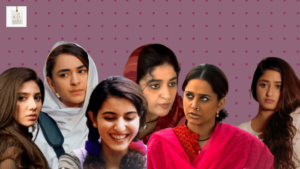
That is the kind of heroine Umera Ahmed tells us to look up to—a perfect showpiece with the right degrees, but not smart or ambitious enough to want a real job, or to love her work and thinking so much that they keep her going during very hard times.
This message—that women’s degrees are only for show—is not harmless in Pakistan, where very few women work, which is a big problem for the country’s economy. We bring up girls who do great in school and university, but then our society, and often the girls themselves, see long-term career success as something they can skip.
Another pattern Umera Ahmed uses is the rich woman who finds religion. This is another dream she repeats that gives the middle-class watcher a special kind of satisfaction. The modern rich woman seems to have everything: money, beauty, freedom, style, and social standing, but she is unhappy. Something is missing. And what is missing, conveniently, is the thing the audience feels it already has—spiritual growth.
So the rich woman may live a life you envy, but actually she needs something from you. You are poorer, less stylish, maybe less free, but spiritually you are ahead of her.
As long as the rich keep struggling to find the spiritual light we already have, they can be rich without us feeling jealous. Their money may buy them big houses, cars, degrees from abroad, and beautiful lives, but sooner or later they will see that none of it is enough.
And once they admit that, maybe our own lack of style, romance, and money stings a little less.
That is why Umera Ahmed’s popularity is unlikely to fade soon. Giving audiences conservative fantasies at a time when the world around them is changing fast acts like a safety blanket for those who cannot keep up.
In the real world, women might be getting divorced more often now with less shame; many may be out there building careers, social media might have made stars who get their power from challenging old rules, but here on mainstream TV, we can still act like the world isn’t changing beyond what we can understand.