The actor said taking care of your health was an act of ‘self-love’.
By Mahnoor | 09-10-2026
Minal Khan urges women to take care of their health and recognize the warning signs of breast cancer.
Minal Khan wants you to take a moment to check for signs of breast cancer, because you deserve that time to care for yourself.
The actor shared a photo on Instagram on Thursday wearing a shirt with a pink ribbon on it — a symbol of breast cancer awareness.
In her post, Khan said she wore the ribbon for the women fighting breast cancer, survivors who inspire many others, and all the women “learning to put our health first”.
The actor said she used to be someone who thought taking time for herself was “selfish”, but has now realized that caring about her health was not selfish at all — it was an act of “self love”.
Khan asked her followers to take a minute for themselves, to look for any signs of breast cancer, which often shows up as physical changes — in size, shape, or color — of the breast, and as lumps in the breasts and under the arms.
October is breast cancer awareness month, also called ‘Pinktober.’ During this month, people wear pink ribbons to help spread the word about the disease.
Pakistan faces a big challenge with breast cancer. In 2024, experts estimated that one out of every eight women in Pakistan will get breast cancer at some point in her life.
Shaukat Khanum Memorial Cancer Hospital in Lahore says about 83,000 women in Pakistan are diagnosed with this disease every year.
Doctors suggest that women check themselves for signs of breast cancer once a month. This simple check is called a self-breast examination and takes just two to three minutes.
The exam asks women to first look at their breasts in a mirror to spot any changes. If they see differences in size, shape, skin color, or nipples, they should see a doctor.
Next, women need to feel their breasts and armpits for any lumps. This is done standing up, then lying down. Women should only do this test once a month, because doing it more often can hide small changes.
This disease can be cured, and finding it early makes it more likely a patient will recover.
The star did not agree with the belief that married women should not go back to their parents’ house.
By Mahnoor | 09-10-2026
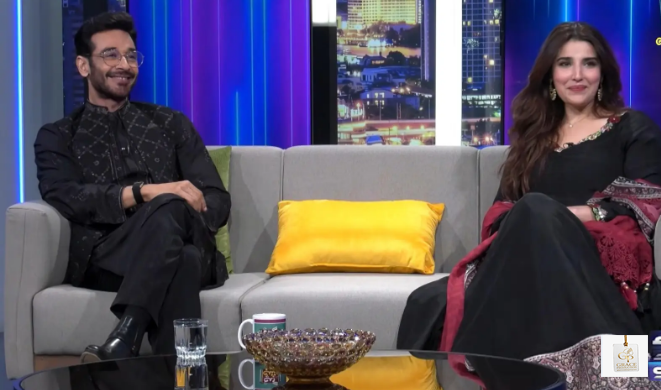
Faysal Quraishi believes parental support should continue even after children get married.
Faysal Quraishi says he believes sons and daughters should matter equally to their parents, and he would support his children even after they get married—just as he thinks all parents should.
The actor, who appeared as a guest on the show Gup Shab, had host Vasay Chaudhry remind him of an old statement he made, where he firmly disagreed with the idea that a married daughter should only come back to her parents’ home when she dies.
Quraishi disagreed with parents who say that only their daughter’s “funeral” should come back to their home. He asked, “Tell me, isn’t she your child? If you’re alive and God has given you strength, then stand with her.”
“You raised her, and now you won’t support her?” he asked, adding, “If she’s facing violence or abuse, you’ll just let that happen?”
The actor pointed out that attitudes were changing, especially in his field, where TV shows had started showing fathers who were willing to protect their daughters.
He said he remembered watching a show where Shamyl Khan played a caring father to Mawra Hocane — likely Jafaa — and was happy to see the bond they shared.
“Whether you have a son or a daughter, they’re equally important,” the star said, “And you have to stand behind your children. When someone is standing behind you, nobody dares [hurt you].”
Quraishi said there was even a line about this in his upcoming movie Mango Jutt, where he looks at his co-star Hareem Farooq — who was also a guest on the show — and says, “When you turn around to look behind you, I’ll be standing right there.”
The actors appeared on Gup Shab to promote their movie, which Farooq also produced.
Earlier on the show, Farooq told the host that she had wanted to make a Punjabi film for a while and finally got her chance with Mango Jutt.
She also shared that Quraishi did all his own stunts in the action film.
The best-selling novelist and successful playwright has built a reputation by selling romantic stories that appeal to middle-class tastes.
By Mahnoor | 08-10-2026
Umera Ahmed reflects on wealth, virtue, and the values that shape society.
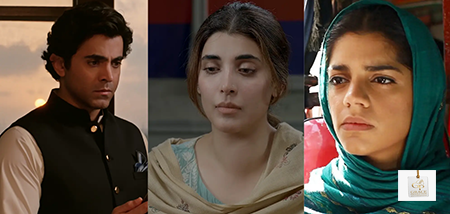
Why is Umera Ahmed so successful? She is one of Pakistan’s best-selling novel writers and maybe its most successful TV drama writer. One reason is that she really understands what her readers and viewers want. Most of them are middle-class Pakistani women, and sometimes men, who want love stories they can relate to. Umera Ahmed knows their hopes, dreams, and worries very well. She is also a great storyteller who knows how to grab people’s emotions and keep them interested.
Love stories are not just popular in Pakistan, though. Around the world, romantic fiction has always been a big part of what people read. It makes billions of dollars and sells more than any other type of book.
Pakistan has a long history of popular love stories too. This started in the 1960s and 1970s with the rise of small magazines called digests. Many people read them, and names like Razia Butt, Teen Aurtein Teen Kahaniyaan, Suspense Digest, Khawateen, and Shua are still known to many older Pakistanis. But these stories really became mainstream when Pakistani TV went private, and many new channels appeared. Before that, the state ran TV, and editors were more serious-minded.
In the 1990s, digest sales started to drop. Editors found that adding a religious part with historical stories, quotes from holy books, and advice from scholars made the magazines sell much better. Once the publishing business understood this, love stories with a touch of Islam became a real genre.
Of course, Naseem Hijazi and writers like him had already done this before. But while Hijazi focused on Islam’s great historical conquerors and the women who adored them, the female writers who carried this genre forward—such as Bano Qudsia, and later Umera and Nimra Ahmed—shifted this theme mostly into a home and family setting.
A bit like her mentor Bano Qudsia, Umera Ahmed is great at bringing these Islamic themes into fancy settings. She sets up modern scenes—smart young students at top universities, studying for tough exams, driving expensive cars, living in huge houses—but the basic ideas and values in her stories stay firmly middle-class and conservative.
We see the appeal of that other lifestyle, and the audience is even allowed to enjoy it for many episodes, but that enjoyment is reined in by warnings at the right moments about what happens to those who leave the right path, and by the story’s moral direction always leaning toward Islam, so the author can’t be blamed for liking or secretly dreaming about that corrupt version of a good life she shows us for so long. Her purpose in showing it isn’t because it’s more vivid or fun, but so we can spot it and avoid it in real life.
Yet while Umera Ahmed’s moral outlook is clearly middle-class, her main characters never are. The middle class is the audience and the moral lens, but it’s never where the hero ends up. He’s either already wealthy or becomes wealthy, or is so gifted that normal money worries don’t apply to him. Zaroon, Salar, and Abu Bakar are hugely successful. Tabish gets disgustingly rich, but Jami, the lazy husband from Kafeel, is the villain because his path goes the other way—he starts rich and becomes poor—and Zamil, the insecure boyfriend from Dar-e-Nijaat, loses his good standing because he can’t match the success of his Harvard-graduate rival, Abu Bakar.
These shows connect with viewers by tapping into their inner feelings—their dreams of moving up in class, their hopes for success in school, and their worry that good people get ignored. Then they give those people special status, huge wealth, or a way out of everyday money problems. But all that money doesn’t end up ruining them, and if it does, it’s just for a short time. These dramas praise middle-class values while each main character leaves behind the middle-class way of living.
A clear example is Abu Bakar, who still drives the old, worn-out car his mother gave him when he graduated. He can afford a much better car, and actually owns one, but when he drives the old one—the one with sentimental meaning—he shows the perfect mix of having money and keeping his soul. The same goes for the ideal heroine of *Aap Ki Izzat*, Beena, who doesn’t care about all the wealth Tabish has gathered; what she wants is his love, but that statement seems more convincing when she says it in a huge mansion with many rooms.
These stories make the middle class feel good about its beliefs by having those values shown by characters who no longer have to live like the middle class. Your way of life is approved while letting you escape your own money troubles for the time of the fantasy.
Umera Ahmed‘s female characters are even more telling in this way.
The heroine often starts out looking smart and driven. Either she’s born rich, stylish, and desirable, like Falak Sher from Shehr-e-Zaat, Imama from Peer-e-Kaamil, or Zaryaab from Dar-e-Nijaat, or she gains wealth later, like Kashaf from Zindagi Gulzar Hai and Beena from Aap Ki Izzat. These women aren’t shown to us as dull homebodies with no life beyond marriage goals, but as they get deeply involved with a man, their careers start to fade away.
Take Kashaf. We keep going on and on about how smart and driven she is, how much she has worked, how much her job means to her, but once she gets married, all that matters is if she is a good wife, if she can control her jealousy, if she can trust Zaroon, if she can cook well, or if she has grown up enough emotionally to make the marriage work. She still has a job, but nobody seems to care about it, not even her.
Imama’s case is even weirder. She becomes an eye doctor, but in Aab-e-Hayat, the follow-up to the huge hit Peer-e-Kaamil, her job becomes almost irrelevant to her life and who she is, while Salar’s career becomes a big focus of the book. The men get work that takes over their lives, defines them, creates problems for them, gives them respect, and can drive the whole story. The women might have impressive degrees, but those are mostly for show, to make them look good and desirable until they can attract the right man.
This is a lot like Pakistani rishta culture’s love for the doctor daughter-in-law, who is a prize to show off and a perfect home nurse for her in-laws’ daily health issues, but few are willing to let her keep working as a doctor with the kind of support and help that a demanding job like medicine needs.
Zeba in Kafeel teaches but doesn’t seem to enjoy any part of her work. It’s just a way to get by because her husband can’t do his duty from God, which is to earn money.
Then there’s Zaryab from Dar-e-Nijaat, a perfect student who is so clever and hardworking that she leaves her boyfriend, Zamil, behind by getting into Harvard Business School, but after he breaks her heart, she leaves her first semester at university halfway through and never even thinks about her unfinished studies again.
Umera Ahmed explores the deeper connection between wealth, goodness, and moral values.
That is the kind of heroine Umera Ahmed tells us to look up to—a perfect showpiece with the right degrees, but not smart or ambitious enough to want a real job, or to love her work and thinking so much that they keep her going during very hard times.
This message—that women’s degrees are only for show—is not harmless in Pakistan, where very few women work, which is a big problem for the country’s economy. We bring up girls who do great in school and university, but then our society, and often the girls themselves, see long-term career success as something they can skip.
Another pattern Umera Ahmed uses is the rich woman who finds religion. This is another dream she repeats that gives the middle-class watcher a special kind of satisfaction. The modern rich woman seems to have everything: money, beauty, freedom, style, and social standing, but she is unhappy. Something is missing. And what is missing, conveniently, is the thing the audience feels it already has—spiritual growth.
So the rich woman may live a life you envy, but actually she needs something from you. You are poorer, less stylish, maybe less free, but spiritually you are ahead of her.
As long as the rich keep struggling to find the spiritual light we already have, they can be rich without us feeling jealous. Their money may buy them big houses, cars, degrees from abroad, and beautiful lives, but sooner or later they will see that none of it is enough.
And once they admit that, maybe our own lack of style, romance, and money stings a little less.
That is why Umera Ahmed’s popularity is unlikely to fade soon. Giving audiences conservative fantasies at a time when the world around them is changing fast acts like a safety blanket for those who cannot keep up.
In the real world, women might be getting divorced more often now with less shame; many may be out there building careers, social media might have made stars who get their power from challenging old rules, but here on mainstream TV, we can still act like the world isn’t changing beyond what we can understand.
The actor appreciates the support but isn’t pleased with why audiences are connecting with the new character.
By Mahnoor | 08-10-2026
Dananeer Mobeen opens up about the confusing audience response to her character Hurmat.
Dananeer Mobeen feels overwhelmed by the response she’s been getting from fans for playing Hurmat in the new drama on HUM TV, which shares the show’s name. But she also feels sad about it.
In an Instagram story posted on Tuesday, the actor thanked viewers for their support but also talked about one comment that really struck her.
While going through feedback, she came across a viewer who wrote, “Our father painted our windows so that we couldn’t look outside.”
Mobeen said this remark left her in an odd spot that actors often end up in — feeling happy that a character has connected with audiences, yet upset about the reasons behind that connection.
“Do you see the puzzle, like I’m so happy that you are connecting but also really, really sad that this is why you’re connecting to my character,” she said, before thanking her fans for watching.
In Hurmat, Mobeen plays a young woman whose very strict and controlling father rules her life. He decides almost everything she does.
This story matters a lot to women in Pakistan, because many of them still face strict limits on their education, freedom, and choices.
In just the first two episodes, Hurmat shows clearly the problems women face when they can’t make their own decisions. Mobeen’s character gets good grades, but she can’t go to university because her father thinks it’s not right for women to go out without a ‘good reason.’ So, Hurmat feels helpless and has very little confidence in herself.
Drama roles don’t often hit this close to home. For Mobeen, this experience has been about feeling thankful and thinking deeply—and it reminds her that TV can sometimes touch real life more than we expect.
Kubra Khan, Gohar Rasheed, Ahmed Ali Akbar, and others handed out 500 essential food packages directly to families in need.
By Mahnoor | 07-10-2026
Pakistani actors extend support and comfort to displaced Palestinians in Jordan.
A group of Pakistani actors traveled to Jordan for five days to help Palestinians who had to leave Gaza. They worked with a UK charity called SKT Welfare on this kind mission.
The trip happened from September 29 to October 3. The actors involved were Jawed Shaikh, Khaled Anam, Saba Hamid, Shagufta Ejaz, Kubra Khan, Gohar Rasheed, Ahmed Ali Akbar, Ally Khan, and Nabeel Zafar.
Working with local teams, the delegation packed food boxes at SKT Welfare’s warehouse. Then they gave out 500 vital food packages straight to Palestinian families.
The team also went to hospitals and homes to see injured patients, giving them emotional support and care.
The delegation set aside a special afternoon for Gaza’s children, gathering to share happy smiles and warm, comforting food.
For patients evacuated from war-torn areas, getting better takes more than medicine. They also need a safe place to live, healthy meals, and dependable transportation to get to important medical visits quickly. SKT Welfare offers this help all year long, covering housing, food, and travel.
This newest mission follows a similar one in 2025, when the charity’s volunteers handed out food packages and hygiene supplies in refugee camps across Jordan, reaching about 76,000 people.
“Humanitarian response means staying connected to people as their situations change,” said Asif Hussain, CEO of SKT Welfare, in a press release.
“For some families, that means support inside Gaza. For others, it means support in Jordan, where they have come for medical treatment. This week, our team met with families directly, listened to what they needed, and took action.”
The Jordan mission is part of SKT Welfare’s larger international program, which aims to bring food, care, and comfort to communities suffering from conflict, displacement, and poverty.
Yet the charity’s work doesn’t stop at the Jordanian border.
Inside Gaza, local teams keep providing life-saving help—giving out food, hot meals, clean water, medical care, hygiene items, and emergency shelter. In 2025, these programs helped over 350,000 people, including 225,450 who got clean water.
The actor also asked for tougher penalties for those responsible.
By Mahnoor | 07-10-2026
Zhalay Sarhadi raises her voice against the misuse of power and the culture that enables sexual violence.
Zhalay Sarhadi spoke about the common issue of sexual violence, while also criticizing the male-dominated systems that allow it to happen.
In a sharp Instagram story posted on Sunday, the actor said that men’s behavior is often driven by one main goal: the misuse of power, usually done “through their ‘private part'”.
Sarhadi, who is well-known for strongly supporting the rights of animals, children, and women, also pointed out how society keeps rape culture alive.
She wrote, “The victim may be of any gender, species, or age. That doesn’t matter. Blaming the victim begins, and the offenders are rarely seen as guilty.”
This comment highlights the deep-rooted habit of blaming victims, which often protects the wrongdoers and forces survivors to stay quiet, creating a never-ending loop of pain and suffering.
She then asked a deep question: “When and how will this cycle end?”
In her post, the actor also shared a solution she believes could help fix the problem.
“Harsher punishments for offenders, and new generations should be raised better,” Sarhadi wrote, adding that the focus should be “strictly on boys, not just girls.”
By calling for harsher punishments, Sarhadi pointed out that the justice system often treats sexual violence too lightly, which fails to stop or prevent future crimes.
But it’s her focus on raising boys that tackles a part of rape culture that is often ignored.
For many generations, the job of preventing sexual violence has been put entirely on women. They are told to dress modestly, avoid going out alone, watch their drinks, and basically make themselves smaller to avoid triggering male ‘desire.’ This way of thinking is flawed because it puts the responsibility for safety on the possible victim, not the possible offender.
Sarhadi’s point that boys must be raised better targets the real cause. In many male-dominated societies, boys are often taught to see aggression as a sign of strength and sexual control as a measure of ‘real’ manhood.
This idea of toxic masculinity says that hiding emotions and using physical force are the marks of being a man, often at the cost of empathy and respecting others’ limits.
By saying “strictly boys not just girls,” Sarhadi is calling for big changes. She argues that parents must actively teach their sons about consent, respect, and why it’s wrong to use power over the weak. Because it’s not enough to teach daughters how to protect themselves; society must teach sons not to attack.
This means breaking down the sense of entitlement often taught to young men, either by accident or on purpose, where they learn that they deserve access to women’s bodies and work.
Two generations of singers impress with their singing.
By Mahnoor | 05-10-2026
Rahat Fateh Ali Khan and Ammar Baig join forces for their latest song, “Aja.”
Two generations of Pakistani music join forces as Rahat Fateh Ali Khan and young singer Ammar Baig release their new song ‘Aja’, which mixes the richness of Eastern classical music with a fresh, modern style.
The track blends Rahat Fateh Ali Khan’s emotional voice with Ammar Baig’s unique sound. Its melody includes hints of classical music along with a up-to-date musical backdrop.
‘Aja’ is about love, longing, waiting, and the pain of being apart. It tells the tale of a heart that waits for someone important to come back and keeps calling out to that person over and over.
Rahat and Ammar mix old and new music styles in their new song ‘Aaja’.
The song quickly became popular with young listeners. Rahat Fateh Ali Khan’s classical style and Ammar Baig’s voice made it more appealing. Eastern classical music was mixed with modern sound and visuals.
The lyrics were written by Waris Baig and Ammar Baig, who also composed the song together. Umair Hassan arranged the music, while Afzal and Stylist Studio did the mixing and mastering.
The video was directed by Jovi Films, with Silent Monk Films as executive producer. Zain-ul-Abideen was the director of photography, and Saba Khalid played the lead role.
The dance steps were created by Pappu Samrath, and the art direction was managed by Sada and Grace Art Studio.
Ammar Baig has gained notice before through many songs. His song ‘Jogiya’ got a lot of praise on YouTube and other music sites, which helped him become more popular.
More recently, Ammar Baig’s new soundtrack ‘Tere Ishq Mein’ from the TV show ‘Madaar’, with Nommal Rauf, came out and fans liked it well.
The stylist had ranted about people and their ‘cheap sense of humour’.
By Mahnoor | 05-10-2026
Yasir Hussain expresses gratitude to Akif Ilyas following criticism of his TV humor
Actor, director, and playwright Yasir Hussain thanked celebrity stylist and photographer Akif Ilyas on Instagram for his support, after Ilyas had criticized Hussain’s comedy during a TV show.
Hussain posted two stories on his Instagram on Friday, saying he was grateful to the stylist and had been for years.
Hussain recalled in his video message, “He did my very first photo shoot and didn’t charge me even one rupee. At that time, he had no competition as a makeup artist or a photographer—that’s how in demand he was, and he’s still that great of an artist.”
Hussain said he often brings up how Ilyas and many other seniors helped him reach where he is today.
About Ilyas’ remarks, the actor said he didn’t understand why the stylist said that, “maybe someone influenced him.”
Hussain said he respects his senior’s opinion and ended the video with “I love you, Akif bhai.”
In the episode of Rise & Shine that aired on Wednesday, the photographer said people have developed a “cheap sense of humor,” and today’s comedians “make fun of others and act like they’ve accomplished something huge.”
Ilyas said that anyone who wants to learn comedy should study the work of Anwar Maqsood and Moin Akhtar, who could make people laugh without using bad words or dirty jokes.
The stylist specifically mentioned Hussain and said these were the kind of people who would call him again and again and say, “Please help build our careers, please make my portfolio, please cut my hair.”
He said that when these people build a platform for themselves, instead of respecting other artists, they go on stage and make fun of others. “They copied me, they said mean things about me, they talked about my friendships in a wrong way.”
Ilyas said that brands in other countries never lowered themselves to criticize their competitors; they let their work speak for them. But in Pakistan, he said, people talk more than they act.
Fans find new hints connecting Ahad Raza Mir and Maya Ali
By Mahnoor | 03-10-2026
Ahad Raza Mir and Maya Ali fuel dating rumors as fans notice their growing bond.
Pakistani actors Ahad Raza Mir and Maya Ali have started new dating rumors after fans spotted several clues they think might link the two stars.
The talk began after the pair recently appeared together in Green TV’s drama ‘Aik Mohabbat Aur’, where their on-screen bond caught a lot of attention from viewers.
Fans bring up Ahad’s old crush on Maya
Ahad and Maya’s duo has drawn attention, partly because Ahad had earlier talked about liking the actor.
Their recent team-up has made fans look back at the two stars’ past again and wonder if they are more than just coworkers.
But neither actor has said publicly that they are dating.
Birthday pics spark rumors
The newest guesswork started when Ahad had his birthday with his family.
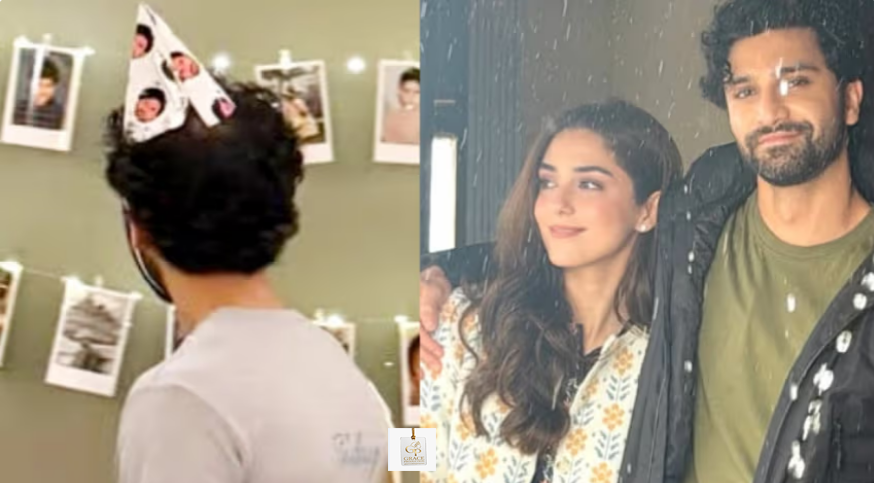
Fans saw a photo of Maya among several pictures on a wall behind the actor during his birthday party.
That same photo had been posted before by Maya in a goodbye message when their show ended.
Fans quickly linked the two posts, and some thought the photo at Ahad’s birthday might mean they are closer than they seem.
Fans notice social media connection
Social media users also noticed that Ahad’s mother and Maya Ali follow each other online.
This finding led to more guessing, with some fans calling it another possible link between the actor and Maya.
Posts and comments on X showed excited reactions from users who said they already thought the two actors were in a relationship.
But follows, photos, and fan observations do not prove that Ahad and Maya are dating.
The actor praised the young performers for their honest acting in what she said were some of her favorite moments in the series.
By Mahnoor | 03-10-2026
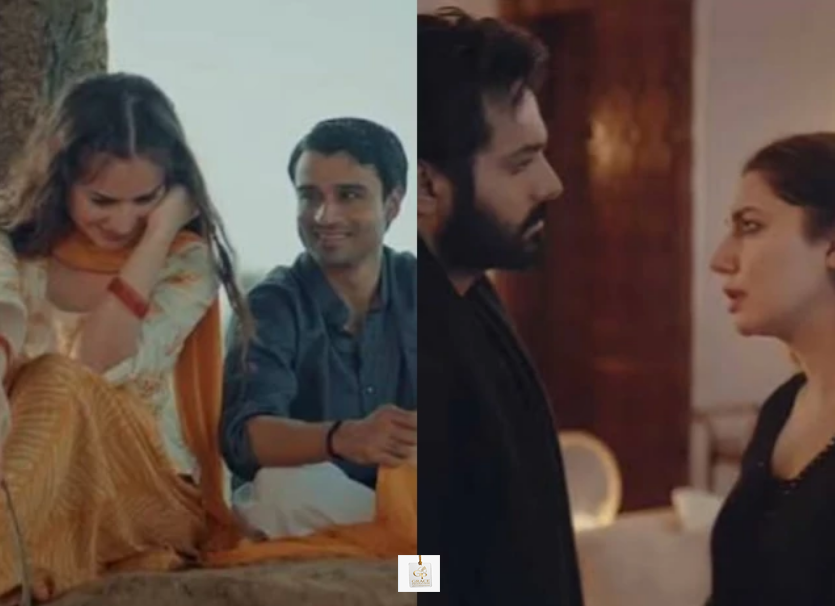
Mahira Khan applauds Aena Khan and Fazal Hussain for their outstanding performances in Mitti De Baway.
Actress Mahira Khan has praised up-and-coming co-stars Aena Khan and Fazal Hussain for their moving performances in the newest episode of Mitti De Baway.
On Instagram, Khan posted a clip from the scene and cheered both actors for saying one of her favorite lines from the show. She also called their acting the start of what she thinks will be bright careers.
“You two! I have no words but I want to say so much. Raw and brilliant. This is justice to one of my favorite scenes in the whole show. Keep going up, babies!” she wrote, tagging Aena and Fazal in the story.
Fans agreed with Khan’s praise, commenting things like “Loved his acting here” and “Their acting is really good.”
Khan is back on TV after being in movies like Aag Lagey Basti Mein and Neelofar. In Mitti De Baway, she plays Billo, a deep love story set in rural Punjab.
Aena is newer to the field. She plays a younger Billo, a girl from a well-thought-of family in Wazirabad. This is one of her biggest roles so far. She was also in shows like Fasana Mart Ka, Dear Bestie, Khwabon Mein Milli, Dil Pe Dastak, and Fairy Tale.
Hussain plays the younger version of Baala, Billo’s love interest, played in the present-day story by Wahaj Ali. He is also now appearing in the fifth season of the reality TV show Tamasha. His past work includes Baby Baji Ki Bahuwain, Baby Baji, and Abdullahpur Ka Devdas.
Mitti De Baway has shown four episodes so far, with the drama starting every Wednesday and Thursday.