Pakistan’s biggest internet event was a night full of famous people.
By Mahnoor | 11-11-2026
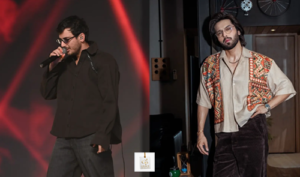
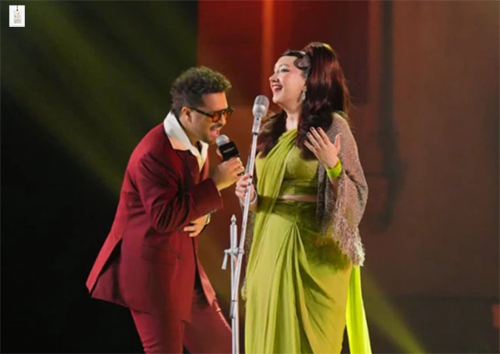
Fahad Mustafa and Hasan Raheem celebrate their wins at Pakistan’s first Influencer Awards.
Some of Pakistan’s biggest social media stars came together at Karachi’s Expo Centre on Saturday night for the first-ever Pakistan Influencer Awards.
Fashion designer Hassan Sheheryar Yasin, actors Rabab Hashim and Dino Ali, and comedian Faiza Saleem hosted the glamorous event. The awards were based on months of looking at performance data, judging by experts, and voting by the public, with prizes in over 30 categories.
Speaking at the event, lead organizer Talha Aslam shared his goal of creating an annual platform that “sets clear and meaningful standards for recognizing talent in Pakistan’s creator economy.”
Salman Iqbal, head of the ARY group, said, “Creators and mainstream media now reach the same audiences, and the best ones deserve recognition that meets global standards of trust and quality.” He called the awards “a meaningful step towards giving Pakistan’s creators the status they have earned.”
Of course, the true stars of the night were the winners from the many award categories. So, without any delay, here are the winners of the first Pakistan Influencer Awards:
Nowadays, everyone loves actors who play characters that aren’t clearly good or bad.
By Mahnoor | 11-11-2026
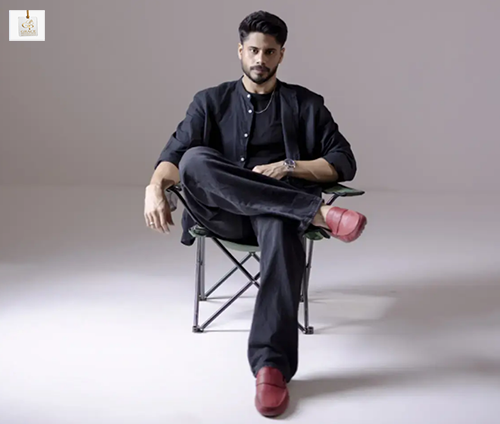
Haris Waheed chooses his passion for acting over the desire for fame.
When I meet Haris Waheed at a coffee shop, he is dealing with a leg injury, but he still shows up on time. No one crowds around him, and there’s no fuss over the character that had TV viewers talking—some disliking him, some laughing at him, yet all waiting to see what he’d do next.
Haris seems unaware that this could also happen in a public place. He recently played Shayan in ARY Digital’s Bas Tera Saath Ho (BTSH), a privileged, morally weak young man who could manipulate others, go to extremes to get back at an insult, make bad choices, and then brush off criticism with a joke or a cheeky comment.
With the drama now over, Shayan’s story gives us a chance to think about what made him so interesting to watch.
Haris sits back, gets comfortable, and starts our talk about the work behind a role that was never meant to be simple.
“I didn’t want to make him [Shayan] look cool,” he says, making his point clear from the start. “I don’t like labeling people as bad and then staying away from them. Whether someone is a villain or morally troubled, I enjoy talking about them and understanding their mindset.”
The actor has never been scared to play characters with deep, complicated emotions that people might not like. What does he find interesting about these parts? Doesn’t he want to play the hero? And why does he separate being famous from acting?
For Haris, the goal wasn’t to make Shayan look blameless; it was to make him feel real.
“I always try to bring a human side to a character,” he says. “When someone watches him, I want them to think, ‘I might have some of these habits too,’ or ‘I might act the same way.’ We all know people like this. We might even see a bit of ourselves in them.”
Getting to Know Shayan
Shayan’s sense of humor was one of his main traits, but it wasn’t just for laughs. Haris felt the character needed more depth, especially since the show often had tense, serious conflicts.
“While filming, we kept coming back to the same dramatic moments,” Haris says. “At one point, I found the character a bit dull, and when that happens, I try to make him more interesting. I thought the show needed some comic relief, a moment where the audience could relax.”
But the humor had to feel natural to Shayan, not forced onto him.
“I wasn’t trying to make him as funny as he turned out to be. I liked the humor, but sometimes I wasn’t sure how people would take it.”
That uncertainty is part of the job. An actor can make choices, but he cannot fully predict how viewers will see them. For Haris, the main goal was to make the character believable enough so that audiences would stay interested in his story.
“I only thought that if I made him believable, the people watching would connect with him,” says Haris while adjusting his injured leg. He then takes a sip of his drink. “Whether they liked him or hated him, they would stick with his journey. To me, that is what acting is all about.”
Shayan’s behavior also showed some self-awareness. He wasn’t always unaware of what his actions could cause, which made his choices more telling.
“He knows when his friends are making a fool of him, yet he still goes along with it. He deliberately asks his friend to make a deepfake video of Anas and Ansa [Farhan Saeed and Sana Javed], knowing it will embarrass them. But before doing something like that, a person has to think about the backlash. What will people say? What if someone finds out? How will I handle the criticism?”
For Haris, the key difference was that Shayan could be entertaining without being admirable. Understanding a character is not the same as defending him.
“There is a fine line,” Haris explains. “If you glamorise him, you lose the point. You might end up making a strange version of the character, and the story no longer works as it should. We can make a morally flawed person understandable, but we also have to stay aware of the effects of his actions.”
Now that the drama is over, the audience can see Shayan as a fully developed character, not just someone waiting for his next mistake. The question is no longer only when his fall will happen, but why viewers stayed interested in a man whose family and friends had so many reasons to dislike him.
In the end, he wasn’t even part of the happy ending in the Mursaleen household, and nothing could be a more fitting end for a character like him.
Tabrez was a different story
“I defined them differently from the start,” he says. “Shayan was younger, spoiled, and his parents backed his goals. Tabrez, though, was ignored by his dad, had his own problems, and his mother had been filling his head with ideas since he was little.”
These differences shaped how each character saw the world. Tabrez’s anger had a long history, while Shayan’s behavior came from a totally different way of growing up.
This contrast matters because Haris doesn’t see morally complex roles as just chances to play a bad guy. The character’s past, feelings, and how they see themselves must guide the acting.
“I keep going back to the director to talk about the character,” he tells me. “If he does something on the outside, I want to know what’s happening inside him. How would he react emotionally? What would push him to act that way? I try to look into the character’s childhood, because so much of a person’s behavior starts there.”
Haris believes this work is key when the script doesn’t spell everything out.
“In our stories, a character’s reasons aren’t always fully fleshed out. Not everything is written in that much detail. Silences aren’t always explored, and small details are often left out. An actor has to fill in those gaps to truly understand the character.”
The Qasim Ali Mureed Connection
One name that instantly comes to Haris’ mind when he talks about two of his “best worst characters,” he says, is director Qasim Ali Mureed. Qasim gave him the chance to play both Shayan and Tabrez. The actor feels grateful for being trusted with roles that go beyond the usual hero-versus-villain setup.
Haris Waheed puts his passion for acting ahead of fame and popularity.
“I had worked with Qasim before, and that character was even more evil,” he says. “I really enjoyed playing him because Qasim gave me the space to perform. He gets the psychology of negative characters and likes talking about what makes them act the way they do.”
Haris thinks that interest is valuable. Instead of seeing a bad guy as just a bunch of bad deeds, a director can push an actor to dig into the reasons behind those actions.
“Usually, people want to stay away from negativity. They label someone as bad and leave it there. But if you dig into the psychology, you can find something fascinating.
“That understanding helps an actor, because the character’s energy comes from inside. You don’t have to push it.”
Working together like this also lets a character grow during filming, says Haris. He seems really committed to building out his characters. But where does this thoughtful way of acting come from?
From Napa to Television
Haris learned how to act through training and real experience long before he ever appeared on TV. He remembers being asked a strange question early in his career that changed how he thought about acting.
“Since I wanted to act, someone sent me to a TV director for a small part,” he says. “But when he asked me, ‘Do you want to be famous, or do you want to be an actor?’ I picked the second one. Then he told me to meet [theatre actor] Saleem Mairaj, which is how I found Napa National Academy of Performing Arts] and tried out for it.”
After getting into Napa, Haris’s training taught him to see acting as a skill, not just a way to get noticed. He also remembers learning from older, skilled performers, including the late Napa founder Zia Mohyeddin.
“I’ve been doing this work for years,” says Haris. “I spent time in theatre and learned from people like Zia Mohyeddin. That experience gives you confidence. Now, when I see a senior actor, I don’t think I can’t stand next to them. I know I’ve worked on my craft.”
He also casually mentions spending time with Bollywood star Naseeruddin Shah, who brought his Motley Theatre to Pakistan in 2013, during Haris’s early days. He adds that this experience had a lasting effect on his path as an actor.
The advantage of being a supporting actor
Over the last three years, Haris has worked on projects like Jaan-i-Jahan, Contractors (2024), Pamaal (2025), and Bas Tera Saath Ho. In all of these, he played supporting roles, not the main lead. I wonder if taking on a lead role is his ultimate goal. But Haris tells me he doesn’t think being the lead is the only way a role has value.
“I never planned to fit into a specific category,” he says seriously. “I didn’t decide I’d only do one type of work. I went for material that interested me, especially when it pushed me. I wanted people to say I did good work, and I felt the best way to achieve that was to keep practicing the craft.”
This attitude also explains why he’s open to playing negative characters. He’s not building a career on being bad; he’s looking for roles that let him try something different.
“If I notice I’m repeating myself, I can’t keep doing the same thing,” he adds. “I want to work on different material. It’s not about whether the character is good or bad. It’s about whether there’s something about him I can dig into.”
For Haris, even a character with little screen time can be worthwhile if the writing and acting have enough depth. The goal isn’t just to be seen more often but to make an impact.
Social media has changed how actors and audiences connect. Praise and criticism come instantly, sometimes from people who’ve followed an actor’s work for years, and sometimes from anonymous accounts. Has this changed how he thinks about his work?
Haris says he tries to separate criticism of a performance from a personal attack.
“When someone understands your body of work and talks about the work itself, you can see there might be something worth considering. You can tell the person has a viewpoint and is discussing your work.”
But, of course, not every comment deserves the same attention.
If someone says something that has no basis, it is just their own opinion. You can let it go. You don’t need to take every comment personally.
He has also watched audiences react to Shayan with a mix of curiosity and dislike. For an actor, that kind of response is helpful when it shows the performance connected with people, even if the character isn’t loved by everyone.
Beyond the screen
Outside of work, Haris enjoys hiking and spending time exploring nature. He admits that the contrast with the entertainment industry is part of what attracts him: the outdoors gives him a break from being constantly seen and the expectations that come with that.
“I love going into a forest,” he shares. “I have hiked before, and what surprises you is the variety of things you find. You read about certain places in geography books, but when you see them for yourself, they become something totally different.”
He’s also drawn to the physical challenge and the distance it gives him from everyday life.
“When you go hiking, you are away from the world you usually live in. You walk, deal with the weather, and solve problems. It gives you a new outlook. You aren’t thinking about the industry or what people are saying about you.”
Age has also changed how he thinks about health. What once seemed easy to take for granted has become a key part of how he wants to live.
“When you are younger, you don’t think about your health the same way,” says Haris. “You assume you are fine. As you get older, you realize how important it is to be healthy, and to have a healthy environment around you.”
The 32-year-old has also become more aware of the need to think about his thoughts and feelings before reacting to them.
Haris says, “It’s important to deal with the thoughts and feelings that come into your mind before you speak or act on them. Just dealing with them can make a big difference. When I started paying attention to my health, I saw how much it changed my life for the better.”
For an actor, he says, life itself becomes part of learning about people. Happiness, disappointment, relationships, and change all help build that understanding.
Haris keeps his personal life private, preferring to focus on what experience teaches him rather than sharing private matters for the public. That same careful thinking shapes his respect for actors like Saba Qamar, Naumaan Ejaz, and Faisal Rehman, whose work he admires for its skill and dedication.
What’s next?
So where does Haris go from here? He says he wants to explore directing, producing, and theater alongside acting on screen. He doesn’t seem in a hurry to plan every step of his future in an industry that keeps changing.
“I am open to opportunities,” he says honestly. “You can’t plan everything in advance. You have to keep working, keep learning, and see what comes your way. If something interesting comes along, I want to be ready.”
That openness matches the career he has built so far: one shaped by training, curiosity, and a willingness to take on characters that don’t have simple answers. He also credits hard work and determination for his career success.
Two of Haris’s dramas are currently airing: Bano on Geo Entertainment and Lagan Lagi on ARY Digital. He hopes the audience will love his characters, Shehryar in Bano and Daniyal in Lagan Lagi, just as they loved Shayan. He believes playing different roles lets him show his acting skills, which is why he chose these two dramas.
With Bas Tera Saath Ho now over, Shayan is joined by Tabrez, another character through whom Haris explores the contradictions in human behavior. He does not need the audience to approve of these men. He just wants them to understand these men enough to keep watching.
The actor told Atiqa Odho that she didn’t have kids, maybe because she wasn’t sure she could handle the responsibilities of raising them.
By Mahnoor | 10-11-2026
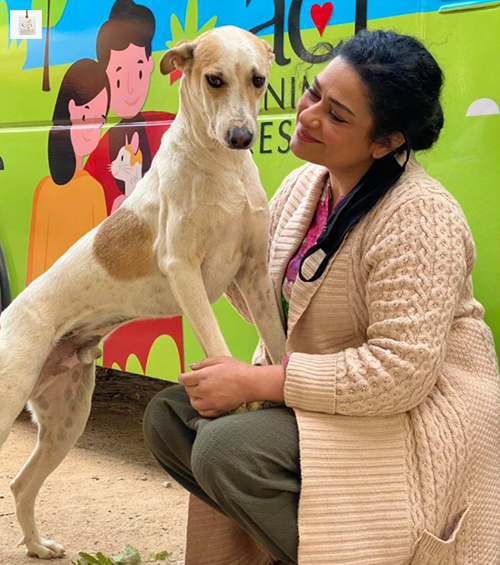
Sania Saeed opens up about motherhood and why her love for animals holds a special place in her heart.
Actor Sania Saeed, who has recently played motherly roles in the popular dramas Dar-e-Nijaat and Aap Ki Izzat, says she never had her own children because she knows how huge a responsibility raising them is.
She was on an episode of veteran actor Atiqa Odho’s podcast when the host asked if her many pets—Saeed has 12 rescue cats—made up for not having children, or if she felt “a void”.
Saeed replied that she hadn’t seen it that way, but she believed both pets and children have their own special role in people’s lives. Still, both women agreed that the love from a pet is “unconditional.”
“I feel, and this might be an unpopular view, but animals’ affection means more to me,” Saeed said. “For one thing, I never really missed having kids.”
When Odho called her “maternal,” the guest said she would have enjoyed having children: “I would have had fun; I like kids, it’s not that I don’t like them.”
But liking kids alone isn’t a reason to have them, she explained, because having kids means meeting their needs and the duties of a mother; she must fully commit to those duties. “Then…they have to come before anything and everything.”
“Maybe I didn’t have children because I wasn’t sure I could handle those responsibilities.”
The actor said that just caring for her pets was already a big responsibility, leaving no room for a social life: “You all meet up, I never join; I never go to any events.”
Odho teased that her guest had to be forced to socialize.
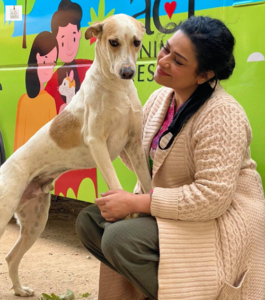
Saeed loves animals deeply. Earlier this year, she even spent her birthday with rescued animals at a shelter run by the Ayesha Chundrigar Foundation.
When asked what her plan was for when she got older and needed children to care for her, Saeed said, “We’ll see when we get there.” She pointed out that many people can’t rely on their kids for care due to various reasons, so not everyone ends up depending on their children.
The actor explains that the scene is meant to show how Zaryab’s relationship with faith is changing.
By Mahnoor | 10-11-2026
Durefishan addresses public judgment over her sleeveless outfit in Dar-e-Nijaat.
It seems like there’s always fresh chatter after each new episode of the popular drama Dar-e-Nijaat, and this weekend was no exception.
A scene where the female lead Zaryab Habib (Durefishan Saleem) declines to wear a sleeveless dress, explaining she’s no longer at ease in such outfits, has triggered a good deal of discussion on social media, and even Saleem herself has joined in.
In an Instagram post on Sunday, the actor clarified that the scene’s purpose was to highlight Zaryab’s evolving personal relationship with faith, and she should be free to undergo that change.
Saleem noted that she views faith as an inner shift that shows up in outward choices, including what someone decides to wear.
The actor emphasized that a woman’s right to pick her clothing should apply to all women across all kinds of dress styles.
Saleem said the real problem is not what Zaryab chooses to wear, but how people “start questioning, examining, or judging her choices instead of simply accepting them”.
She said Dar-e-Nijaat was Zaryab’s story: “her flaws, her faults, her contradictions as a woman”. The actor said the audience had the right to their own opinion about it.
However, she did question why a simple story choice needed to be blown out of proportion and treated like a national crisis. “Not every character’s development needs a panel discussion, a jury, and a final decision from the internet.”
“You don’t have to agree with Zaryab, you don’t have to connect with her, and you definitely don’t have to treat her journey as your own… Sometimes, it’s just someone else’s story.”
Unlike her character, she said, she was comfortable wearing sleeveless clothes and had been for a while. “That’s my personal view on modesty, and someone else’s might be completely different,” Saleem said.
She said her faith did not give her the right to judge others, nor did it give others the right to judge her. What she decides to wear, feel comfortable in, or change about herself is her own business, she repeated.
The actor, who plays Hamna in the popular show, keeps surprising us with unexpected twists, and we can’t keep up.
By Mahnoor | 09-11-2026
Romaisa Khan reveals what viewers can expect next in Dar-e-Nijaat.
Actor Romaisa Khan just shared big spoilers for her popular drama Dar-e-Nijaat, and we’re all surprised by what she said about the show’s ending.
In a video posted to her Instagram on Saturday, the actor said she was grateful to her fans for all the support they gave her character Hamna, and as a thank-you, she would share all the inside details about what’s coming next on the show.
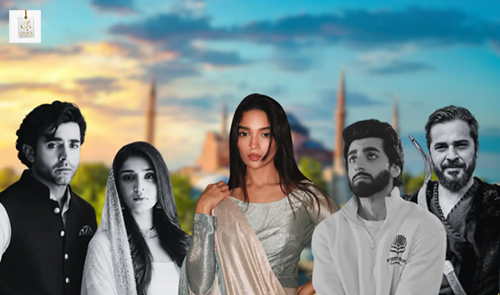
The female lead, Zaryab (played by Durefishan Saleem), said she will move to Turkey near the end of the show. There, she will meet—and you won’t believe this—the historic Turkish leader Ertugrul, who is a cousin of her ex-boyfriend Zamil (Nameer Khan). So, Ertugrul would technically be Hamna’s brother-in-law, since she ends up married to Zamil.
This whole situation makes Zaryab’s husband, Abu Bakar (Sheheryar Munawar), very upset. He becomes a motivational speaker and holds a seminar called ‘Lets Move On’ to get over his lost love. At that seminar, in the front row, he sees the last person anyone would expect: Zamil—and you can hear the gasps from the crowd.
And if you’re wondering what else could happen in this crazy dream-like TV show, Zamil tells Abu Bakar that his mother Khushbakht (Sania Saeed) is also Zamil’s mother, which makes them step-brothers?
Now, while Khan doesn’t say if Abu Bakar reacts by shouting “No! That’s not true! That’s impossible,” she does reveal what her own character does out of frustration with this messy relationship tangle: she moves to Dubai and starts working in real estate.
Okay, Khan was clearly joking and none of that really happened. She asked fans if they thought she was crazy enough to tell them the real story and get fired—which is a fair question for anyone who’s read this far.
She told people to watch the show themselves to see what actually goes down.
Actress excites fans as she gets ready to come back after almost 16 years.
By Mahnoor | 09-11-2026
Reema Khan hints at an exciting comeback to cinema.
KARACHI:Pakistani film star Reema Khan is coming back to the big screen after about 16 years. She will join filmmaker Wajahat Rauf’s new movie called Panchi Pyare.
The news has made fans and people in the entertainment world very excited. Many are happy to see one of Pakistan’s most famous actresses return.
Talking to The Express Tribune, Rauf said the response to the announcement has been very positive.
“Since we shared the news, all we get is love from people both inside and outside the industry. I think seeing her again on the big screen will be a treat for our audience. She is our national treasure and a legend,” he said.
Rauf described Panchi Pyare as a family comedy with strong emotional moments. He added that the film is being made as a full Eid entertainment package.
“It’s a family comedy with high emotions. A complete Eid entertainer. Reema ji loved the script, and that’s why she decided to join this project,” he said.
Reema Khan was one of Pakistan’s top film actresses in the 1990s. She has acted in more than 200 films since her first movie in 1990. Pakistani film critics have praised her acting. She got the Pride of Performance Award in 2019 for her work in Pakistani cinema.
Reema loved acting from a young age. She learned dance and acted in a theater group as a child star. In 1985, she played a child role in the film Qismat. In 1990, Pakistani film director Javed Fazil noticed her for the first time.
Reema became famous in Pakistani cinema with Bulandi in 1990, and she became one of the top actresses in the 1990s and 2000s.
Over a career that lasted more than twenty years, she acted in over 200 films, working in both Urdu and Punjabi movies.
Some of her well-known films are Nikah (1998), Mujhe Chand Chahiye (2000), Shararat (2003), Koi Tujh Sa Kahan (2005), and Love Mein Ghum (2011).
She also made a name for herself behind the camera, starting as a director and producer with Koi Tujh Sa Kahan.
Her last big film was Love Mein Ghum in 2011. So, her role in Panchi Pyare will be a big return to movies for an actress whose work helped shape an era of Pakistani films.
We don’t yet know details about her character or the other actors, but her comeback is already a hot topic among movie fans.
The actress showed off her five-month-old baby for the first time.
By Mahnoor | 07-11-2026
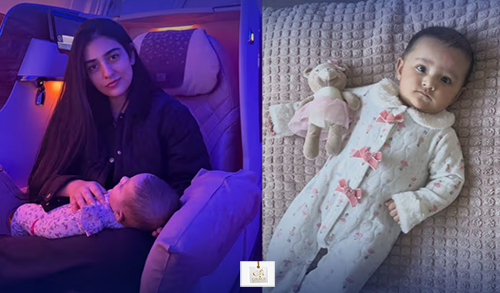
Sarah Khan introduces her adorable daughter Rania to the public for the first time.
Pakistani actress Sarah Khan has given fans their first look at her younger daughter, Rania, after keeping her away from the public eye since she was born.
She made the reveal while appearing on Nida Yasir’s morning show, ‘Good Morning Pakistan,’ on October 4. Sarah said the family had purposely not shared Rania’s photos publicly before the TV appearance.
Host Nida Yasir was excited about the moment and noted it was the first time viewers saw the baby’s face. She also mentioned that audiences had followed Sarah’s motherhood journey on the same show.
After the baby’s arrival, Sarah posted a set of family photos on Instagram, showing moments from Rania’s birth up to her first five months. One photo showed singer Falak Shabir holding his newborn daughter, while another showed the close bond growing between Rania and her older sister, Alyana.
The actress added a sweet note with the newest picture of her youngest daughter, calling her “my Rani”.
A famous actress talks about how being ignored by her parents can affect someone for a long time.
By Mahnoor | 07-11-2026
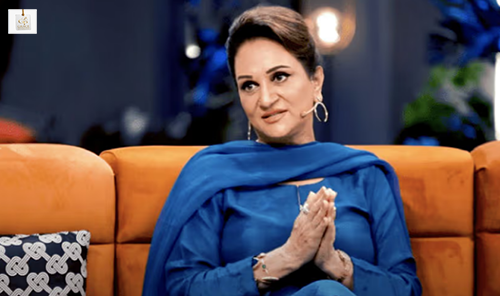
Bushra Ansari delivers a heartfelt message to fathers who walk away from their children.
Veteran Pakistani actress Bushra Ansari has highlighted the emotional impact of fathers who are not around, sharing a message about why it’s important to be actively involved in children’s lives.
She reposted a video on Instagram showing how a father’s neglect can hurt a child’s sense of worth and emotional health.
The video explains that ignoring children, leaving them, or making them feel unimportant can cause lasting emotional damage. It also says that children need more than just money from their fathers—they also need love, guidance, and real one-on-one time.
By stressing the point, Bushra wrote on the post, “For those fathers who left their children!!”
The video also points out why it’s important to spend good time with kids, saying that simple daily talks and giving each child personal attention can make them feel loved, important, and safe.
With her post, the actress has reminded people that being a father means more than just paying for things; it’s also about being there emotionally and staying involved in your children’s lives all the time.
Actor joins back with the creative team for the new drama, which is said to be a murder mystery directed by Danish Nawaz.
By Mahnoor | 06-11-2026
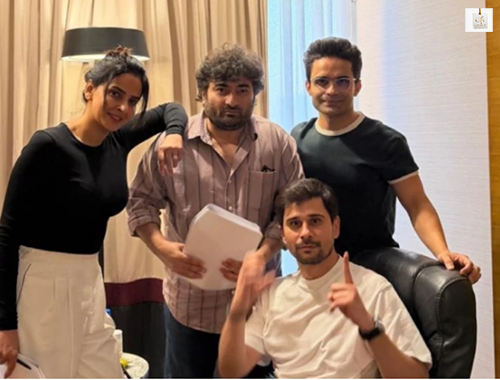
Saba Qamar gives fans a sneak peek of Case No 10 with Tabish Hashmi through fun behind-the-scenes photos.
Saba Qamar has given fans a look at her new project, Case No 10, posting behind-the-scenes photos that have made people curious about the drama, especially her surprising team-up with comedian and TV host Tabish Hashmi.
On Instagram, the actress shared a set of pictures showing herself with Hashmi and other crew members. The post gave a sneak peek at the preparations, with the cast and crew practicing their lines and going over the script.
Some photos seemed to be taken in a hotel room, showing the team hanging out together while getting ready for the show. “Some very special cases are coming together for Case #10,” Qamar wrote in the caption, adding film and celebration emojis.
The news has grabbed viewers’ interest mainly because of the odd pairing of Qamar and Hashmi. Known for comedy and hosting, Hashmi’s role has sparked questions about what character he’ll play and how his on-screen chemistry with Qamar will turn out.
The project also brings back the creative team behind the successful Case No 9. Journalist Shahzeb Khanzada, who wrote his first script for the previous show, is reportedly writing the new one as well.
Directed by Danish Nawaz, Case No 10 is already getting attention because of the success of the earlier show. Early reports say the upcoming drama is a murder mystery, but details about its plot and characters are still secret.
Case No 9 starred Qamar as Sehar Moazzam, a woman who fights a powerful businessman after surviving sexual violence. With actors like Faysal Quraishi, Aamina Sheikh, Gohar Rasheed, and Junaid Khan, the show looked at the problems survivors face when seeking justice in Pakistan’s legal and social systems.
The series ended in January this year, leaving a strong mark on viewers with its courtroom story and socially relevant themes.
With Qamar’s latest photos giving a peek at the team at work, excitement is growing about what the next case will offer.
Although the creators haven’t shared full details about the story, cast, or release date, Hashmi’s involvement has made the upcoming project even more intriguing.
An actor describes how men’s behavior shifted as women changed their clothing during a test on harassment and confidence.
By Mahnoor | 06-11-2026
Hina Bayat’s social experiment exposes disturbing public attitudes and judgments about how women dress.
Actress Hina Bayat has started a big online argument after sharing a social experiment that looked at how men treat women based on what they wear.
The experiment, where women wore different outfits, brought up uncomfortable findings about harassment, confidence, and how women are seen in public.
In a popular Instagram clip from a recent interview, Bayat explained how the experiment was done in a market to watch men’s reactions to women in various clothes.
She said the team first sent two girls into the market while filming them. One girl wore jeans with a short top, and the other wore a traditional loose outfit. “As they walked through the market, many men stared at them, but no one talked to them,” Hina recalled.
After 30 minutes, the same girls went back to the market, but their looks had changed. One wrapped a scarf around herself, and the other was also dressed more covered up.
However, this time the response was different. She said, “This time, people started making remarks while staring at us. It grew from there. It was very surprising to me.”
The experiment took another turn when the girls were sent out a third time. One wore a niqab, while the other wore a regular dupatta styled as a hijab.
According to Bayat, the men began acting even more disrespectfully towards them. She explained, “This time, the men started treating them with disrespect,” and added that the team initially had trouble understanding why the reactions had changed.
After looking at their observations, Bayat said the team reached a troubling conclusion about the mindset of the men involved.
She said, “We found out that when men saw girls as confident, they avoided them because they knew those were the type of girls who would yell, cause a scene, or slap them. But the moment we made the girls look more modest, the men saw them as weak and fragile.”
Bayat described the findings as a disturbing reflection of an attitude where some men link modest clothing with weakness, instead of respecting women no matter how they look.
The experiment also brought mixed reactions from social media users.
While some agreed with the actor’s points and said the issue was with men’s attitudes, others said that confidence cannot be judged by clothes, and that women can be confident no matter what they wear.
Bayat’s social experiment has again brought attention to worries about women’s safety in public places. Although people disagree about the role of clothing, body language, and confidence, harassment cannot be excused by a woman’s looks or what she chooses to wear.
Modest clothes do not show weakness, just as modern clothes do not automatically mean someone is confident. No woman should have to change her appearance, dress a certain way, or act a certain way to avoid being harassed.
The blame for such behavior belongs to the people who do it, not the women who experience it.