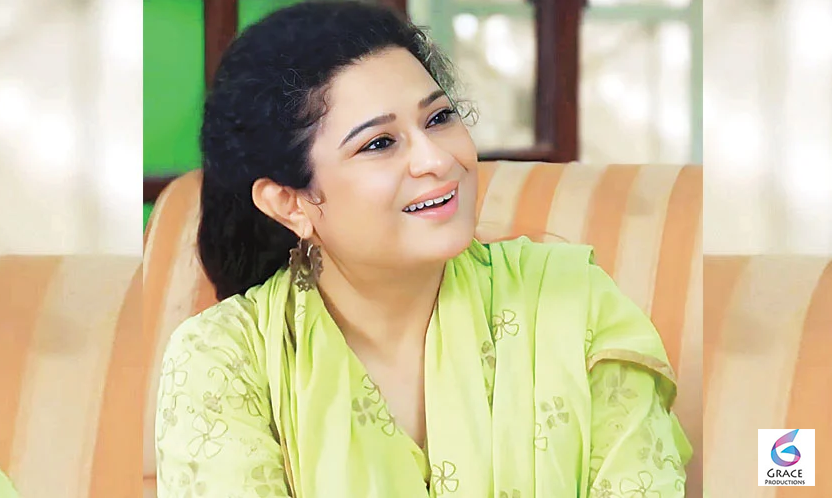
Sania Saeed Calls for Stronger Female Characters and Challenges TV Stereotypes
BY Mahnoor | 22-06-2026
Pakistani television has long been admired for its emotional storytelling, memorable characters, and family-centered narratives. However, one criticism that continues to surface is the limited way women are portrayed on screen. Veteran actress Sania Saeed recently addressed this issue in a thought-provoking conversation, highlighting the need for more realistic female characters and more meaningful storytelling.
Known for choosing unconventional roles throughout her career, Sania Saeed has always been a strong advocate for quality content. In her recent discussion, she shared her concerns about the repetitive formulas often used in television dramas and questioned why audiences are frequently offered only simplistic portrayals of women.
The Problem with Traditional Female Characters
For decades, many television dramas have relied on familiar female stereotypes. Women are often presented as either innocent victims who spend most of their time suffering or as manipulative villains determined to create conflict. While such portrayals may create drama, they rarely reflect the complexity of real life.
According to Sania Saeed, this narrow representation limits storytelling and prevents audiences from seeing women as complete human beings. Real people have strengths, weaknesses, ambitions, fears, and contradictions. Yet television frequently reduces women to one-dimensional characters who fit neatly into categories of “good” or “bad.”
She emphasized that audiences deserve stories that reflect reality rather than exaggerated clichés. Human beings are naturally complex, and television should embrace that complexity instead of avoiding it.
Why Complex Women Are Rarely Seen on Screen
One of the most interesting points raised during the discussion was society’s discomfort with flawed female characters. While male characters are often allowed to make mistakes and remain relatable, women are frequently expected to be perfect role models or obvious antagonists.
Sania Saeed suggested that this mindset reflects broader social attitudes. Many people struggle to accept women who do not fit traditional expectations. As a result, television often avoids presenting female characters who are realistic, imperfect, and emotionally layered.
When audiences encounter such characters, they sometimes rush to judge them rather than trying to understand their motivations. Saeed believes this reaction discourages writers from exploring more nuanced stories.
Respecting the Intelligence of the Audience
Another major topic discussed was the common belief within the entertainment industry that viewers only want simple content. Television networks often argue that people face enough stress in their daily lives and therefore prefer easy-to-follow dramas that require little emotional or intellectual engagement.
Sania Saeed challenged this assumption.
She argued that creators should not underestimate viewers. According to her, treating entertainment merely as background noise reduces the value of storytelling. When audiences are given content that demands little attention, they gradually become less emotionally invested in what they watch.
She pointed out that many modern dramas are written in a way that allows viewers to understand everything instantly. The characters are predictable, the conflicts are familiar, and the outcomes often feel obvious. While this formula may attract short-term attention, it rarely leaves a lasting impact.
Saeed believes audiences are capable of appreciating richer narratives if writers and producers are willing to take creative risks.
Stress Is Not an Excuse for Weak Storytelling
A common argument used by television executives is that people want simple entertainment because life itself is already difficult. However, Saeed strongly disagrees with this reasoning.
She explained that storytelling should help people understand the challenges they face rather than distract them from reality. Good stories provide language, perspective, and emotional insight that can help viewers make sense of their experiences.
Instead of simplifying every issue, television can encourage audiences to think more deeply about relationships, society, and personal struggles. In Saeed’s view, meaningful storytelling has the power to educate and inspire while still being entertaining.
The Importance of Creative Directors
Throughout her career, Sania Saeed has worked with many directors and writers. During the conversation, she expressed appreciation for filmmakers who continue to experiment and push creative boundaries.
She highlighted the importance of working with directors who value artistic integrity rather than simply following popular formulas. Creative directors often bring depth to familiar stories by focusing on authentic emotions and realistic performances.
According to Saeed, talented directors can transform even a conventional script into something memorable. Their ability to understand human behavior allows them to create scenes that feel genuine and emotionally powerful.
This commitment to quality becomes especially important in an industry where commercial success often takes priority over artistic expression.
Television’s Role in Shaping Social Attitudes
Sania Saeed also discussed how television influences society’s understanding of gender roles and social norms. She believes that many dramas unintentionally reinforce outdated beliefs because the people creating them often share those same assumptions.
When television repeatedly presents certain behaviors as normal, audiences may begin to accept them without question. This can make it harder for society to imagine alternatives or challenge existing systems.
One concern raised by Saeed is the recurring message that difficult situations cannot be changed. Many dramas portray social problems as unavoidable realities rather than issues that can be addressed through awareness and action.
She believes storytellers have a responsibility to examine these patterns rather than simply repeating them.
Understanding Characters Instead of Judging Them
In today’s digital world, viewers frequently share their opinions online immediately after watching an episode. Characters are often criticized for making poor decisions or behaving in morally questionable ways.
Sania Saeed encouraged audiences to approach fictional characters with curiosity rather than judgment. She argued that compelling stories are not about presenting perfect people. Instead, they explore why individuals behave the way they do.
A flawed character can reveal important truths about society, relationships, and human psychology. By understanding these complexities, viewers gain a deeper appreciation of both the story and the people around them.
This perspective reflects Saeed’s long-standing belief that storytelling should encourage empathy rather than quick conclusions.
The Future of Pakistani Television
Despite her criticisms, Sania Saeed remains optimistic about the future of Pakistani television. She acknowledged the efforts of writers and directors who are already working to create more meaningful content.
The industry has shown signs of progress in recent years, with some dramas exploring stronger female characters, social issues, and unconventional narratives. However, Saeed believes there is still significant room for growth.
She hopes future productions will move beyond outdated stereotypes and trust audiences to engage with more sophisticated stories. By creating realistic characters and embracing emotional complexity, television can become both entertaining and socially relevant.