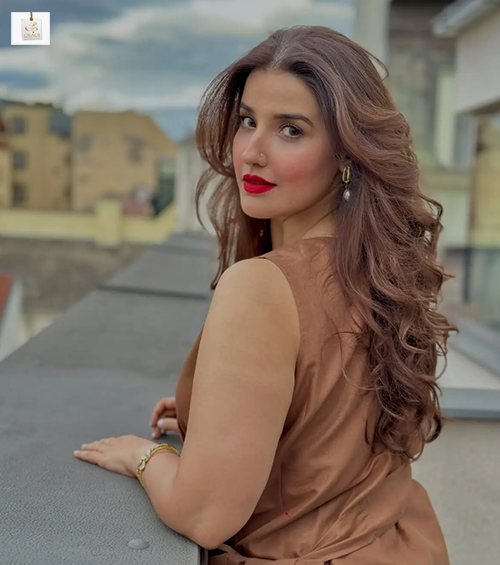
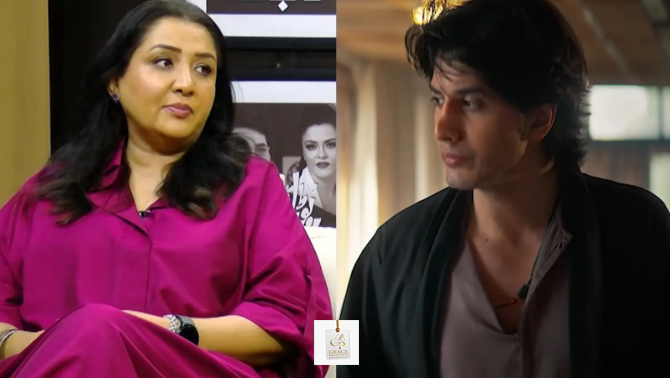
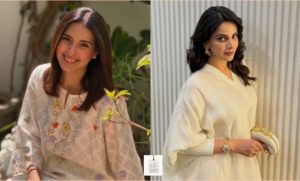
The actor said that a person’s ‘true beauty’ comes from within.
By Mahnoor | 28-09-2026
Hareem Farooq encourages everyone to love and accept themselves fully.
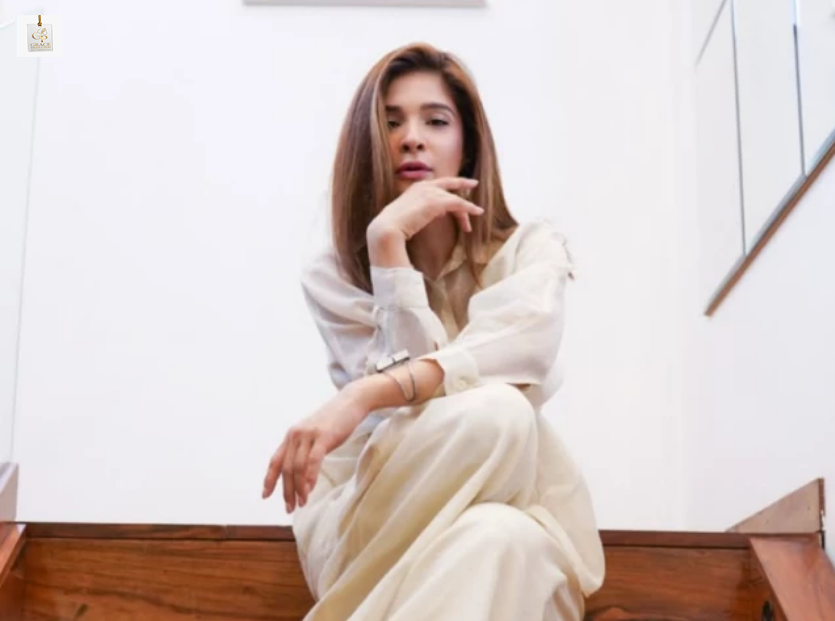
Actor Hareem Farooq has a special message for her fans: be kind to yourselves and to others, because that’s what true beauty is.
In an Instagram post shared on Sunday, she said beauty isn’t about how people look, and argued that real beauty comes from how people choose to live their lives.
Farooq said that things like stretch marks, acne marks, hair loss, and weight gain can’t decide if someone is beautiful or valuable. She explained that human bodies change over time due to stress, trauma, and illness, and that unfair beauty rules from society make women think they have to fit into a set mold.
The actor said a person’s “deepest beauty” comes from things like “the love you carry in your heart, the intelligence of your mind, the purity of your soul, the glimmer of hope in your eyes, the way you face hard times, and the wish to always do and become better than yesterday,” plus much more.
She made her advice very clear: “Be yourself. Own who you are. You’ll shine from the inside out.”
Hareem Farooq asked her followers to accept, respect, and appreciate the bodies that have helped them get through many tough moments.
“Be thankful for your body. Be kind to it. Move it toward health, with gratitude as your best supporter,” the actor advised.
Farooq asked people to live their own lives and let others do the same, because “[someone’s] body is not a public debate, a cautionary tale, or an invitation for commentary.”
“Let everyone exist without needing permission. Let people dress, age, change, heal, and take up space without being judged against someone else’s standards.”
The actor said people need to “break the cycle” with their thoughts and actions. She advised them to “be unapologetically yourself and make room for everyone else to do the same.”
While her message is sure to connect with many, this isn’t the first time Farooq has spoken out about people shaming others for how they look. In 2024, she talked about her role in the show Bismil and how she chose not to go on a crash diet to lose weight for it.
She has also been a target of body shaming, with one notable incident in 2021 when the actor faced a rude joke from Faryal Mehmood on TV.
Farooq has also discussed her own journey with staying healthy and how it can be a worthwhile challenge for someone to take on.
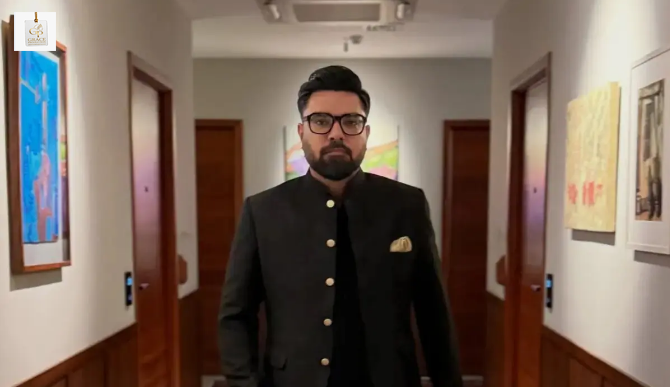
Even though he clearly loves theatre, the actor has never wanted to be known for just one type of acting.
By Mahnoor | 28-09-2026
Yasir Hussain shares his thoughts on theater, timing, and stepping onto the stage.
The stage is full of dancing, crazy jokes, and total madness. The actors run around, flirt, fight, and just enjoy being wonderfully, hilariously silly. After getting great reviews last year for Monkey Business, theatre director, actor, and writer Yasir Hussain and his team are back with So Suite, and once again they have the audience laughing non-stop.
The play’s story follows Yasir Hussain’s usual style: wild comedy, loud fun, sometimes clever, sometimes mindless, full of sly hints and sharp, current jokes. The quick jokes keep coming: pokes at Karachi’s famous dirtiness, jokes about actor and producer Humayun Saeed and TV host Fiza Ali, actor Faysal Quraishi’s big weight loss, and a funny nod to how common ‘black money’ is, and more.
Yasir has often said he loves the crazy stage shows of Umer Sharif from the past, where the only goal was to make people laugh. In that spirit, he doesn’t bother being politically correct. The humor isn’t cleaned up, checked, or measured to avoid upsetting anyone — this wild group is here to make you laugh and not take things too seriously.
So Suite first ran in Lahore, then had a few shows in Multan, and after that it came to Karachi. Even the jokes traveled along. After the first performance, Yasir explained that the script is changed based on the city where the play is shown: “The phone ringtone in the Karachi show is Hania Aamir’s song ‘Pablo’ — in Lahore it was something different.”
It’s a small point, but an important one. Much of what makes Yasir’s theatre appealing is how immediate it feels. The jokes are tied to the moment—they’re meant for the audience right in front of him, in the city where the show is happening, and they’re about the topics people are discussing at that very time.
Made for the stage
Theatre has always been like a second home to Yasir. He has acted in TV dramas and films, hosted shows, written scripts, directed projects, and given candid interviews, which made him a familiar name. But the stage is where his special talent for comic timing truly shines.
People remember him playing Akbar in the play Aangan Terrha, written by Anwar Maqsood and directed by Dawar Mehmood. Yasir has worked with Mehmood’s Kopykats Productions on many other hit stage shows, like Pawnay 14 August, Sawa 14 August, and Half Plate.
In theatre circles, it’s well known that when Yasir Hussain is in a play’s cast, tickets sell faster. Theatre has always been a big part of Yasir’s work, so it’s no surprise that last year he started his own theatre company, called Lo Iq Films, with the play *Monkey Business*.
Still, even with his strong love for theatre, Yasir never wanted to be known for just one thing.
He says, “I’ve also had success in films. At least once every two years, I appear in a movie. I enjoy making TV dramas and hosting. At the same time, I never wanted to get stuck in one routine. There was a time I hosted a show for Hum TV, and I could have kept doing it, but I didn’t want to be known mainly as a host.”
I tell him that his work on stage is truly unique. Doesn’t he feel that his comic timing sets him apart from many others? He agrees.
“Yes, comic timing is very important. How you structure a sentence is sometimes what makes it funny. When I write a play, I understand why playwrights like Khalil-ur-Rehman Qamar get upset when their scripts are changed. In certain sentences, the whole effect depends on how the words are linked and what kind of impact they leave.”
Timing is everything
Yasir continues: “I have worked on my comic timing for years, and it is very important for performing on stage. The late Umer Sharif had perfect timing. But once, when I met him in his later years, he was still trying to deliver jokes at the same quick pace, but it made me sad to see that sometimes his timing was not as sharp.
That’s when I realized that there is no point in holding back jokes or saving them for later. Right now, I am at my best. I can deliver one-liners one after another. I can perform live for almost an hour. This is my time to be on stage.”
Yasir’s energy is truly surprising as he moves quickly around the stage, never missing a moment in the fun chaos that defines his style. In Monkey Business, he was on stage most of the time. In So Suite, he takes a break for a few scenes, letting the rest of the cast carry the story before he comes back.
“It can be tiring,” says Yasir. “When I go backstage after a scene, I sometimes stop to catch my breath. And after the show, many times, people from the audience come to meet me, and I see videos of me with them, smiling weakly. You have to put in so much energy and make sure everything is timed right — it can wear you out.”
Yasir Hussain reveals why the stage feels right for him at this point in his career.
Did he purposely write So Suite’s script so that there would be many scenes where he is not on stage?
“Yes, I wanted the rest of the cast to carry the story too,” admits Yasir. “I want to train new actors who can share the stage with me and, sometimes, also perform all by themselves.”
It’s not exactly politically correct
Did he worry that some jokes in his script might offend the audience? “No, I don’t think about that,” Yasir answers quickly. “And I believe the audience isn’t offended either. Every day after the show, I meet people who tell me they laughed the whole time.
“Our shows have gone really well in Lahore, Multan, and now Karachi. Humor that stays inside safe limits is like food served without salt—it would be tasteless.” He adds, “Yes, some jokes lean toward being ‘bold,’ but our first show in Karachi was for our friends and family, and they weren’t offended. This gives me hope that audiences on other days will also just enjoy the show.”
And does he sometimes laugh while writing his script? “You know, I’ve never found my own script funny,” he admits.
“Up until the last day of rehearsals, I keep asking my actors if a certain scene is funny or not. I usually write a basic script, and while we rehearse, I start adding more jokes. There’s no day when I’m not nervous before going on stage. That feeling pushes me to do a good job every day. The day I get too confident, the performance will suffer.”
Does he get the same level of dedication from his actors?
“They all work very hard,” Yasir agrees, “but there have been times when an actor gets a lot of applause one day, and then the next day, they just don’t perform well. I think many people, after getting a little praise, start thinking they’re Dilip Kumar! That overconfidence can really hurt their performance.”
He then points out another issue that keeps coming up with actors. “It’s also tiring when I work with actors who are also busy with TV dramas. There have been times when we’ve waited until 11 at night for cast members to show up after finishing their TV shoots.
I know they have other jobs to do, but I care a lot about how my actors are treated. I pay them well and in advance. When we travel, I book them nice hotels and cover their transport and meals. I try to help them as much as I can, but in return, I expect them to stay focused on their work.
He explains why he thinks actors should value theater just as much. “TV is attractive, but one good performance by an actor can go unnoticed in a whole episode. On stage, that same scene gets applause right away. Nothing compares to that.”
The importance of being “with it”
Both of Yasir’s plays have been big hits. Why hasn’t he put videos of them on YouTube, like Umer Sharif’s plays used to be on video cassettes?
“Back then, people would sit and watch whole plays for hours—now, they watch two-minute clips,” Yasir says. “People enjoy seeing the show live, but I think they wouldn’t enjoy it as much if the whole play was uploaded to YouTube.
“Also, the jokes are funny because they’re timely. In Monkey Business, I joked about actor Danish Taimoor because, at that time, his controversial ‘filhaal’ (for now) quote was going around. Today, that joke won’t work. People have moved on. I’ll joke about other things now.
“The comedy depends a lot on being very current,” Yasir adds. “If I put on the same play a few months from now, I’d change many of the jokes, based on what’s being talked about then.”
Between So Suite’s many-city theater tour, Yasir also made time for a trip to Thailand, where he filmed for the upcoming movie Jawani Phir Nahin Ani 3 (JPNA 3). He’s one of the new cast members in the popular film series, which is still being shot and is set to come out early next year.
“I flew straight from Multan to shoot abroad for Jawani Phir Nahin Ani 3. Some shooting is still left. It’s been a great experience. I’ve learned so much, working with Humayun Saeed, Fahad Mustafa, and Nadeem Baig.”
Also in the works is a movie Yasir co-wrote, which he also plans to produce, direct, and star in: 5,000 Mein Shaadi! “My older sister says I should try to release one stage show every year, so that’s something I’m thinking about,” he shares. “But I don’t know how long I can keep doing this without an investor backing me.
The movie, along with a documentary and five short films, represents Pakistan.
By Mahnoor | 26-09-2026
Sarmad Khoosat’s Lali selected for the opening night of the Tasveer Film Festival in Seattle.
Sarmad Khoosat‘s film Lali first showed in Berlin, won an award in Washington DC, and was screened in London. Now it’s heading to Seattle for the Tasveer Film Festival.
This festival is the only South Asian one where a win can make a film eligible for Oscar consideration. It features 136 films, including 21 full-length features.
On Thursday, the festival announced on Instagram that Lali would be shown on opening night.
The movie will be shown on October 15 at 6pm local time at the Tasveer Film Centre. Before the screening, there will be a red carpet walk, and after the movie ends, the cast and crew will talk with the audience. There will also be a fancy dinner with live music and a DJ.
For those who don’t know, Lali is about Zeba (played by Mamya Shajaffar), a young woman who is called a “cursed bride” after three of her earlier boyfriends die in strange ways. According to The Hollywood Reporter, Lali “looks at the fear, shame, and violence hidden in close relationships.” It tries to face and let go of the hidden pressures that still hurt many partnerships.
Besides Shajaffar, Lali has a strong cast, including Rasti Farooq from Joyland and Meher Bano from Churails. The music for the movie was made by Abdullah Siddiqui.
Also at Tasveer, there is Habiba Nousheen’s documentary The Gymnasts of Fisherman Colony and five short films by Pakistani directors: Farqalit Gharshin’s Tsrak, Kamran Faiq’s The Last Glance, Basir Ahmed’s Khazana, Ali Mehdi’s Shireen, and Ravia Rasool’s Silence on Set.
Pakistan has done very well at past Tasveer Film Festivals, with Wakhri opening the 2024 event along with an Indian movie.
In 2019, Ahmed Ali Akbar’s movie Laal Kabootar won the festival’s Archana Soy Audience Choice Award for Best Feature Film, along with an Indian film.
A designer talks about expressing yourself, being eco-friendly, and the skilled work behind her New York Fashion Week collection.
By Mahnoor | 26-09-2026
Nadia Khan’s gym-related questions spark discussion as Parishae Adnan celebrates her New York Fashion Week appearance.
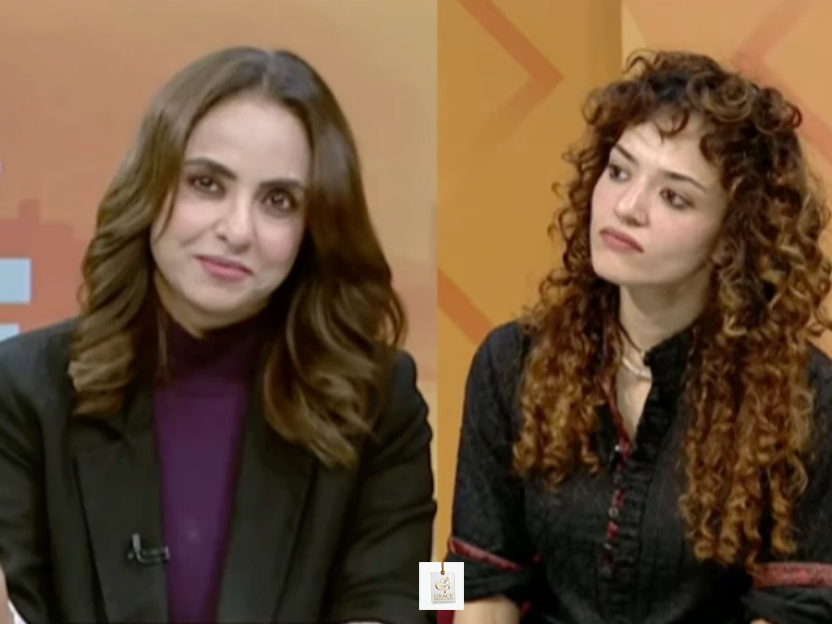
TV host Nadia Khan faced criticism for her interview with designer Parishae Adnan. Viewers wondered why the talk, which followed the designer’s success at New York Fashion Week, kept focusing on her clothes, gym videos, and whether her parents approved of her choices.
Parishae recently appeared on Rise and Shine, co-hosted by Khan and Zohaib Hassan on 365 News, after showing her collection Second Skin at New York Fashion Week, where she closed Flying Solo’s event. The collection focused on sustainability and reusing old clothes, bringing Pakistani skill and fashion traditions to an international stage.
But instead of mainly talking about the collection or her work details, the interview often turned to Parishae’s personal choices—like how she dresses, her gym videos, her limits, and whether her parents dislike her looks.
Even with this focus, Parishae stayed calm and kept trying to steer the talk back to fashion, creativity, and why she makes these choices. “It is expressive, whether that is being in the gym, dressing a certain way, doing your hair, or anything else someone does,” Parishae said.
“Humans are complex. You can’t pick one thing and judge. We all have many sides. You might like cooking or running, so I don’t label myself either. What matters is that people don’t define us,” she added.
The talk about Parishae’s looks became one of the most memorable parts of the interview.
Khan asked Parishae about how she dresses, including comments on her dressing “like a man”, and asked her to show her muscles before the chat moved to the bigger topic of how she shows herself.
Parishae pushed back against the idea that one part of her appearance should define who she is. To her, clothes are just another way to express herself.
She also said she has “always been a rebellious kid” and later added, “I am a very religious person too by the way”, after the hosts kept questioning her clothing choices.
The talk then shifted to boundaries and whether they can be the same for everyone. “I don’t think anything is fixed. Art is open to personal view. Your boundary isn’t always mine or someone else’s,” Parishae said.
That point became very important when Khan brought up Parishae’s gym videos again.
The Gym Question
“When you’re in the public eye, the gym videos you make get criticism, so doesn’t that worry your parents?” Khan asked.
Parishae’s answer, though, steered the talk away from what she wears and toward why she shares her fitness journey publicly.
“Yes, maybe, but I think safety is a concern. But aside from that, what gets me up and takes me to the gym is when I get messages in my inbox from all those girls, women, even older women who get inspired by seeing it and go to the gym themselves. That’s a big thing,” she said.
She also explained that representation was something she didn’t have growing up. “When I was young, I didn’t have anyone like that to show me I can have those genetics, or a close Pakistani I can follow who has that body ideal.”
For her, sharing the journey isn’t just about showing off her own body or lifestyle. It’s also about showing other people that such a journey is possible.
Still, the constant focus on her gym clothes clashed with the reason she was invited on the show in the first place. But Parishae used the chance to talk about her work.
“It wasn’t just given to me”
Parishae often hears that being from a well-known fashion family meant her career was handed to her.
But she is the daughter of designers Amir Adnan and Huma Adnan, yet fashion wasn’t her first choice. “My parents never once told me to go into this. At first, I did everything else: consulting, business, hospitality, management, and even hospital care during COVID.”
When she eventually came back to fashion, she saw it differently. “When you go away and come back full circle, you love the craft in a different way.”
She also talked about the “nepo-baby” label, giving a fresh take on kids joining family businesses.
“When I was young, people called me a ‘nepo-baby’, but I’ve been thinking about this over the last 10-15 days. In older times, these kids were called ‘apprentices’. Passing a business to the next generation means bringing your kids into it.” “I feel that’s been my path too. It wasn’t handed to me; I just grew up around clothes and sewing.”
Being raised in fashion didn’t mean she automatically got a creative identity. “Even with education, my father said you can’t teach creativity—it’s just there naturally. It shows more when you work at it and ‘do it’ rather than just studying it.”
A bigger talk about fashion in Pakistan
The interview also let Parishae talk about what she thinks is missing from talks about fashion and other creative work in Pakistan.
She asked why talks about creative work in Pakistan sometimes focus on the show around it, not the actual skilled work involved.
“We were talking about boundaries. We often talk about art, not these things, and here we are on TV discussing boundaries. I wanted to make an interesting point. I think going to NYFW is a big success, but the bigger thing was that the praise you get there is more about skill, but here, that kind of skill isn’t discussed.”
Parishae compared the talk about fashion to how acting is often seen. “For example, when acting is talked about, people don’t treat it as a skill. Over there, the same things are discussed, like in my work: walking, stitching, flow of lines. If you sit down to do the craft, you have to know it.”
Her comments pointed out a bigger problem: that people can spend more time talking about personalities, looks, and show rather than the actual craft behind creative work.
The story behind the NYFW show
Parishae’s appearance at New York Fashion Week was based on an idea she had already tried before, which she said was not mentioned during the interview. Fans then blamed the hosts for not doing their homework.
“This is not something new. I did a show like this in 2020 in Pakistan, and I got a lot of backlash for it. The work is very similar. The idea, the meaning, the method, the structure — almost all the same.”
She said she had already shared the same message and approach in Pakistan, where people did not really get the idea of reusing old clothes. “People in this society did not understand the idea of reusing old clothes.”
For Parishae, this matters a lot because thrift shopping and reuse are becoming more and more important to younger people.
To wrap up, she said: “In our generation, thrifting is also important because we are teaching today’s kids and the next ones that we cannot remake old things the way they were.”
The backlash around the interview came mostly from the gap between the big event and the kind of questions asked.
Parishae had just shown Second Skin at New York Fashion Week and closed Flying Solo’s showcase. Yet many of the main questions aimed at her were about what she wears to the gym and if her parents worry about that.
The exchange later drew criticism on social media. Parishae herself shared clips of her reactions to the interview, while her mother, Huma, called the questions “unnecessary”.
What makes the interview stand out is that Parishae didn’t turn the exchange into a fight. Instead, she kept answering even as the talk shifted to her looks, boundaries, and gym videos, trying to explain the reasons behind her choices.
And when the topic moved to fashion, she gave a detailed explanation of craft, sustainability, and the technical side of her work. For
Parishae, that meant not being seen just as a designer with famous parents, a woman who exercises, someone who dresses a certain way, or even a designer who just appeared at NYFW.
She was making the point that she should be seen as all of those things at once. And maybe that was the conversation worth having from the start.
Afgan objected to Zafar’s role in his newest drama, Raqaas.
By Mahnoor | 24-09-2026
Danyal Zafar gives a witty response after Nadia Afgan compares him to a flat balloon.
Right after the success of Zanjeerain, Danyal Zafar’s new show Raqaas is already on air — and Nadia Afgan doesn’t like it. After she said his newest role looks a little tired or flat, Zafar replied in his own mysterious way.
On Tuesday, he posted on Instagram with a cryptic caption, saying he got a new compliment. The post included pictures and a video of Zafar from the show’s set.
In his post, the actor said people need to see the clear line between fictional characters and real people, since that line seems to be missing for many. He also seemed to explain how he picks his projects, focusing mainly on the story’s message.
Zafar said he chose to do Raqaas because it talked about how women and girls are silenced in society, especially at home.
On September 20, Afgan appeared on the show Kya Drama Hai, where she compared Zafar’s roles in Raqaas and Zanjeerain. She said his new character was like Zanjeerain’s Sarbuland, but as if you let the air out of a balloon and it goes flat.
When she kept going, calling him a two-day-old birthday balloon, Nadia Khan jumped in and said he looked like a tire that didn’t have enough air.
Afgan said she thought people were trying to make Zafar’s character seem like a moody, proud hero, similar to Fitzwilliam Darcy in Pride and Prejudice or Heathcliff from Wuthering Heights. But she felt the dialogues for the role didn’t fit that image.
She added that Zafar was new to acting and just needed some time to improve his skills.
During the show, the participants praised the last episode of Zanjeerain, with Afgan even complimenting Zafar and his co-star Sajal Ali for giving their best performance in the series during that final episode.
Zafar had more complaints in his post, where he asked people to stop the “negative energy around ‘shipping culture'”. He also said he was sad that technology had pushed people apart instead of bringing them closer.
In a statement that might have been directed at Afgan, Zafar said, “Please tune in to the same channel.”
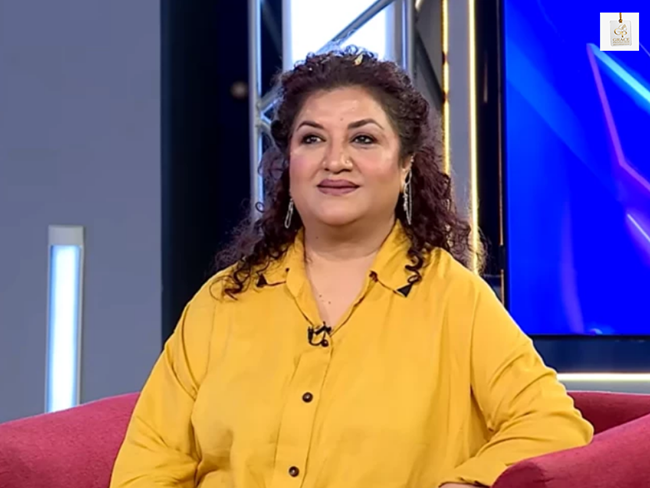
A veteran actor talks about letting go of ego for a role and the flaws in Pakistani TV.
By Mahnoor | 24-09-2026
Hina Dilpazeer opens up about acting, fame, and the pressures of chasing popularity.
Veteran actor Hina Dilpazeer shared her honest thoughts on acting and the state of Pakistani TV in a chat with Vasay Chaudhry.
She said acting needs you to completely let go of your ego. “True acting means breaking your ego and fully losing yourself to live someone else’s life,” she said. She called acting a “sea of fire” that new actors must be ready to jump into completely if they want to make it.
She also said she puts her full effort into every role, no matter the kind, and noted that a serious role can bring “a flood of grief,” while a funny one can help people forget their own sorrows.
Dilpazeer also talked about her hardest acting job ever, which happened just days after her father died, when she had to go back to work on a comedy show.
“Keeping up the character and the fake cheerfulness for the audience while I was grieving,” she said, “was the toughest acting task she has ever faced.”
The actor also criticized current trends in Pakistani TV, saying many dramas are let down by weak writing.
“Many dramas today don’t have strong, well-written stories. TV’s reach makes it powerful enough to shape what people think, and filling it with weak filler wastes both time and money.”
She was just as critical of what she called the industry’s “blind race” toward fame, warning that chasing superstar status can become a “black hole” for a serious acting career, pulling actors away from the depth their work needs.
Actor asks schools, colleges, and workplaces to make mental health help easier to get.
By Mahnoor | 23-09-2026
Ayesha Omar calls for greater mental health support after the Peshawar grave desecration case
Actor Ayesha Omar has asked for more mental health support in Pakistan after reports that a 19-year-old man was arrested in Peshawar for digging up and damaging the bodies of dead girls.
In an Instagram Story, Omar shared a report about this disturbing event and used it to point out what she called a bigger need to deal with psychological pain and emotional health across society.
“The whole nation of Pakistan needs urgent psychiatric and psychological therapy, at different levels,” she wrote, adding that she included herself because of “all the PTSD and traumas” she has gone through.
Omar also asked for mental health experts to be easier to reach in schools, colleges, and workplaces.
“I think it should be required in schools, colleges, and workplaces. We need experts coming in, instead of money help,” she said. “Give us therapy. Not dollars.”
Her comments came after police in Peshawar arrested a 19-year-old Afghan man. Police said they caught him digging up the body of a girl from a grave in the Shaikhan area. According to police, the suspect had also dug up several other graves that held girls’ bodies. Authorities said they were still investigating the case.
These disturbing reports caused concern and criticism on social media. Omar’s response shifted the focus to how violence and trauma affect people’s minds, and why it’s important to have better access to mental health care.
Omar has spoken openly before about mental health and emotional well-being. She has talked about how important it is to accept emotional weakness and to work on how we react emotionally. She has also joined talks that aim to spread awareness about mental health.
The actor has also shared her own struggles with stress and trust. She said she had dealt with overthinking and stress, and described healing as a process that never truly ends.
Her latest comments have again put mental health in the spotlight, especially the question of whether schools, colleges, and workplaces should give people more access to trained mental health experts.
The actor also talks about industry manners, being on time, picking roles, and the career moment that defined ‘Humsafar’.
By Mahnoor | 23-09-2026
Saba Faisal addresses viral fame and the impact of edited clips taken out of context.
Veteran actor Saba Faisal recently talked to Vasay Chaudhry about how viral clips are made from her words. She said her words are often taken out of context, and this has hurt the good name she has worked many years to build.
Faisal has always spoken openly on shows, especially about marriage and family. She said the real problem isn’t what she says, but how her words are twisted online. She noted, “I don’t even say anything, and yet it still happens.” Because of this, she now takes longer breaks from public events.
She was direct about the harm this causes. “The respect and honour we have built over our entire lives gets severely disturbed when a couple of words are spliced together and edited into the video,” she said. This practice values going viral over telling the truth of what was really said.
For Faisal, this trend has turned into a kind of sickness. She called virality “a strange illness that has become so widespread.” She said people are obsessed with going viral, and it has become the easiest thing to do.
Her worries also touched on the entertainment industry losing basic professional respect. She said criticism of senior artists has become too casual and public. Problems on a set should be solved privately, not on TV.
She added, “You sit and criticise artists, and those people criticise who have no standing here, who have achieved nothing, who have nothing to their credit.” Internal issues, she said, should be settled behind closed doors instead of being aired for everyone to see.
Whether it is Sajal [Aly] or anyone else, a seasoned artist whom a big production company invests money in, you cannot just sit on a channel and criticize them like that. We are all people from the same industry; we are all here to support each other,” she said.
Faisal then turned to a quality she considers essential for professional success: being on time.
“A successful person is always someone who is punctual, who values time, and who knows how to keep their personal ego out of their work,” she said, calling consistency “the ultimate secret to success” while noting that fewer people in the industry seemed to focus on it.
When asked about the industry’s ongoing love for mother-in-law/daughter-in-law dramas, Faisal disagreed with the idea that the genre was simply about actors’ creative choices.
“It’s not for me; it’s because of people’s approach and mindset,” she said. “The part of society that watches television has these exact problems and ways of solving them, which is why production companies invest money in them.”
She was equally straightforward about how she picks her roles. “Whatever character gives me a good deal, good pay, and lots of screen time, I’ll take it.”
Looking back at her work, Faisal pointed to Humsafar as the show that changed how she saw acting.
“Before, I was always cast as a pretty lady in sarees with heavy makeup,” she said about her early parts. “When I did Humsafar, I learned what an actor truly craves, what they need, and how to perform. That was a turning point in my career.”
Outside of industry drama, Faisal credited her deliberately positive attitude for helping her handle tough times.
“A positive mindset should be everyone’s weapon. It supports you in hard moments and when you’re at your lowest,” she said, adding that she now saw hardship as something that ultimately strengthened her character rather than breaking it.
That same idea shaped how she viewed time. “The present moment is the best; it’s the highest,” she said, noting that nostalgia often made the past look better than it really was.
She carried this outlook into her personal life too, staying a strong believer in traditional family values and mutual respect—a view she had expressed before and continued to hold, even when it drew criticism.
The Suno Chanda actor wrote a touching message in reply to Qamar’s public appreciation at an event in London.
By Mahnoor | 22-09-2026
Iqra Aziz and Saba Qamar highlight the importance of supporting your peers.
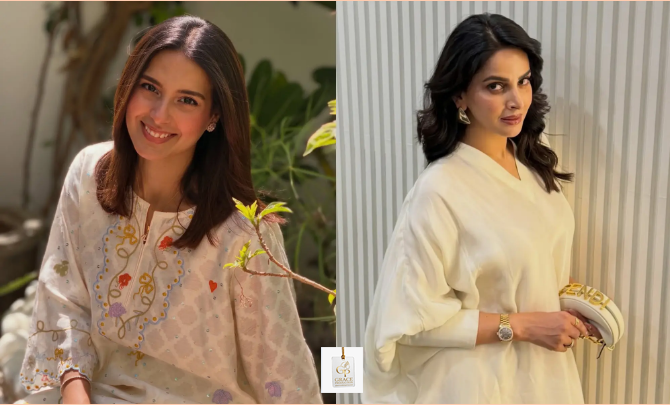
Iqra Aziz praised her fellow actor Saba Qamar in a heartfelt message shared on Sunday, calling her one of the “best” actors in Pakistan.
The Suno Chanda star shared her thoughts in an Instagram story after a video clip of Qamar praising Aziz’s acting skills went viral.
“You honestly have no idea how much your words mean to me. You are one of the best actors this country has had the chance to see, and I’ve looked up to you for a long time. I’ve watched Hindi Medium more times than I can count and have learned so much from watching you. So to hear these words from you feels incredibly special and honestly, a little unreal. I feel so honored. Thank you so, so much,” Aziz wrote.
The heartwarming moment started when Qamar showed up at a fan event in London on Friday. The host, Azfar Rehman, asked the Muamma star which young actress she would pick to play her in a movie about her life.
“I really like Iqra Aziz. She’s such a talented actress. Just look at her work. She’s got this kind of fire we keep talking about,” Qamar said.
Aziz’s Instagram story reminded everyone that when someone gives you genuine appreciation, it deserves to be given back in the same way.
This exchange also points to a bigger change in the industry, where actors, especially women, are now speaking out more about each other’s work instead of staying quiet and competitive. Aziz’s choice to publicly honor Qamar’s legacy, and Qamar’s willingness to praise a younger peer, suggests a culture that is slowly making room for generosity and kindness.
It’s always nice to see top stars supporting each other — and this exchange was a lovely reminder of that.
An influencer is asking for stronger actions against the people who used her face without asking her first.
By Mahnoor | 22-09-2026
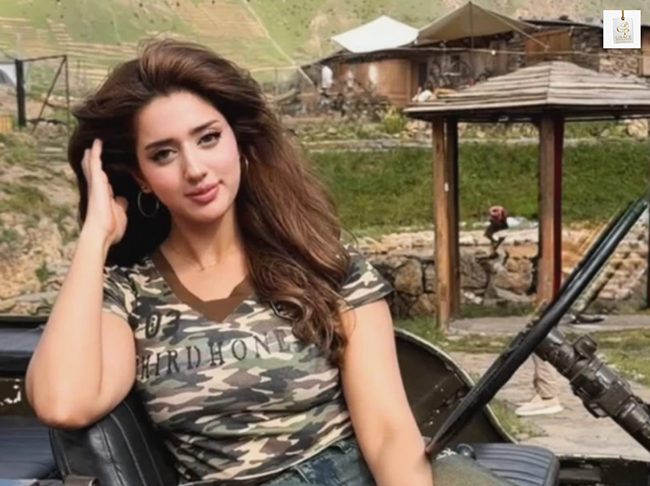
Jannat Mirza raises concerns over the misuse of women’s faces in fake videos
Influencer Jannat Mirza has gone online to ask for strong action against people who use others’ faces to make fake and misleading content.
Mirza shared a video of herself and a male friend joking around and holding hands, calling out creators for supposedly using her face to make a fake video without her okay and putting her reputation at risk.
She said, “This video is not funny at all. Using someone’s face and making videos like this is very worrying. Today, it might be my face being used, but tomorrow it could be any girl’s face, and her reputation could be put at risk.”
The influencer added, “I’m someone who spends a lot of time on social media, and even I felt very uneasy seeing this. Think about girls who don’t use social media at all—their photos can also be misused in ways they might never find out about.”
Mirza’s remarks about how AI and people’s identities are being misused earned praise from fans online, and many also asked for stronger rules to deal with this problem.
She is completely right about this issue. There should be proper laws regarding this. AI is dangerous, especially in a society like Pakistan where respect matters a lot. It is a place where people can face violence in the name of tradition,” one user wrote.
Another added, “There need to be strict rules to punish those who create such videos using AI.”