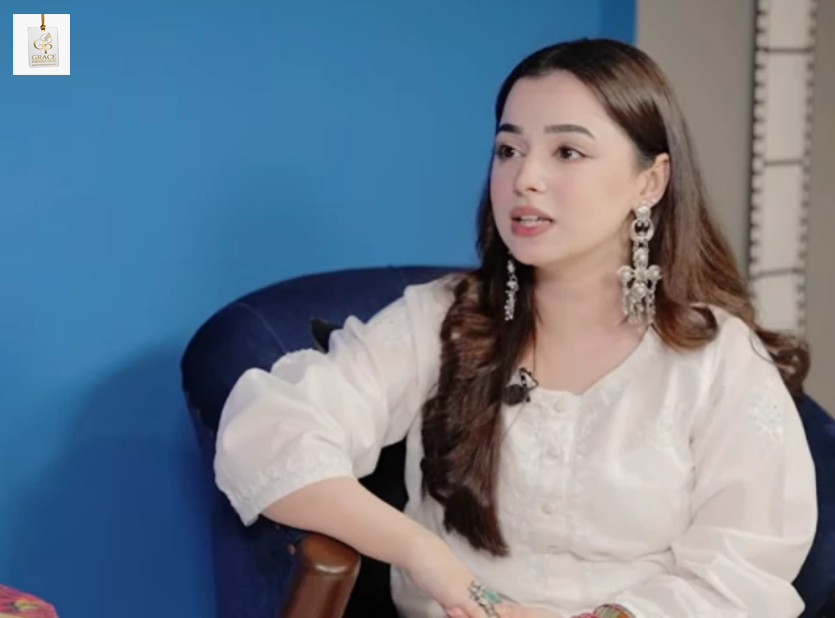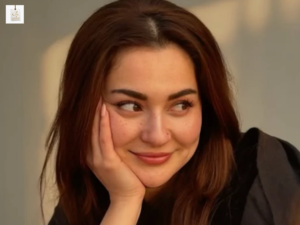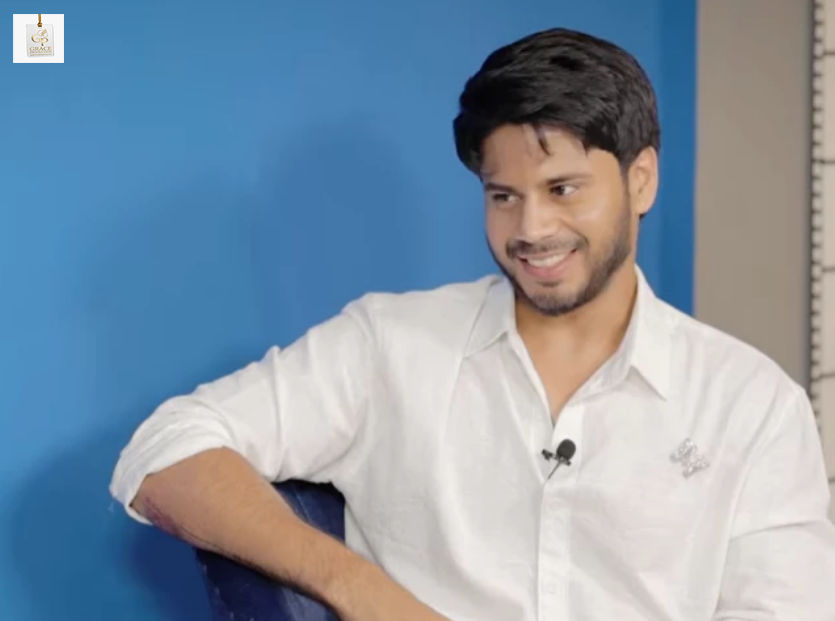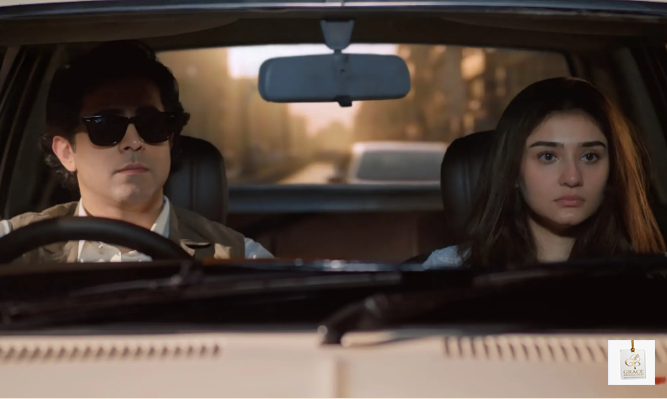
Durefishan Saleem says Dar-e-Nijaat challenges the unfair rules about who gets forgiveness.

The actor said the show isn’t about how women should get better.

By Mahnoor | 21-09-2026

Durefishan Saleem discusses Dar-e-Nijaat and its message about forgiveness
Durefishan Saleem highlights Dar-e-Nijaat’s powerful take on forgiveness and unfair social rules.

Durefishan Saleem wants people watching Dar-e-Nijaat to stop seeing it as a show that tells women how to heal.

Reacting to criticism about the latest plot twists, the actor posted on Instagram on Sunday to explain what she believes the drama’s real message is.

“The story is less about saying women can’t heal by themselves, and more about pointing out the unfair double standard when it comes to forgiveness — how easily a man can make mistakes, ask for a second chance, and get it, while women are often expected to live with the consequences of their choices for a lot longer,” she wrote.

Sometimes, the best way to watch a story is to just see it as something that happened to someone. You don’t have to agree with every choice a character makes to understand their feelings or feel for their journey,” she added, before noting that people are complex and not everything has to “fit neatly into a morally right” standard.

In another Instagram story, Saleem shared a post saying Dar-e-Nijaat is about a woman discovering herself — not about a man.

Saleem wrote in the caption: “Sometimes, finding yourself is the love story you needed all along.”

For context, the latest episodes of Dar-e-Nijaat mainly focused on the lead character, Zaryab, who has been dealing with anxiety and depression after being betrayed and dumped by her long-time boyfriend and childhood sweetheart, Zamil (played by Nameer Khan).

In episodes 14 and 15, aired on Friday and Saturday, Zaryab goes through what looks like a panic attack. Her family tries to calm her down, but she doesn’t seem to improve. It’s only when her possible love interest, Abu Bakr (played by actor Sheheryar Munawar), comes in, recites verses from the Holy Quran to bless a glass of water, and gently helps her drink it that she can get up and walk.

This particular scene, it turns out, didn’t sit well with some viewers, who think the drama is sending a problematic message: that women going through heartbreak need a man’s support to heal and recover.

One user on X pointed out that Zaryab’s character needs therapy—not a man.

Another person thinks the show seems to make it look okay for men to rescue women. She said instead that each person needs to heal themselves.

One viewer said the part where Abu Bakar “comes to save” Zaryab is not realistic.

But, as Saleem pointed out, that’s not the main idea. Instead, the show focuses on how much harder it is for women to find forgiveness through religion than it is for men.

On one side, we have Zaryab, who seems to find it hard to move on because she feels bad about living with Zamil without being married. On the other side, we have Zamil, who broke up with Zaryab quickly and harshly as soon as he found religion again, saying he has the right to start fresh while she doesn’t. He married someone he thought was good enough for him in a religious way, without thinking about his own mistakes at all, and based on some talks in the last two episodes, he will soon be able to live with his family again.

Meanwhile, Zaryab is deeply sad, questioning all her life choices. She can’t move forward, or even think about marrying someone else, because she feels her mistake is worse than Zamil’s.

This difference in how much guilt and self-reflection the woman feels compared to the man is, according to Saleem, the main point of the story.
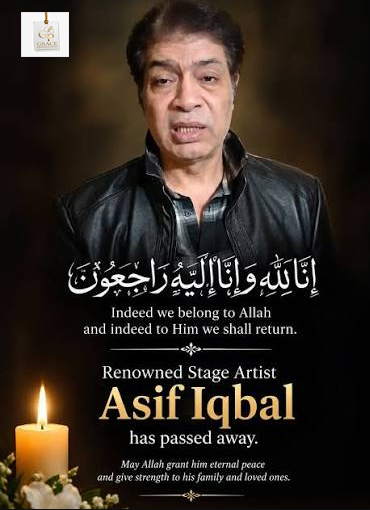

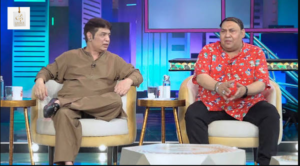
Asif Iqbal Death news | Dies of Heart Attack: Career, Life and Legacy

Introduction

By Mahnoor | 20-09-2026

Actor and comedian Asif Iqbal remembered after his reported death from a heart attack
Pakistani actor and comedian Asif Iqbal passes away after reportedly suffering a heart attack.

Pakistani entertainment industry is grieving over the reported death of actor and comedian Asif Iqbal, who is said to have died from a heart attack. His death has saddened colleagues, fans, and followers, with many recalling his contributions to comedy and acting.

Asif Iqbal was known for bringing laughter and entertainment to audiences through his roles as an actor and comedian. His passing is a sorrowful moment for those who followed his career and enjoyed seeing him on screen.

Asif Iqbal Dies of Heart Attack

Reports say actor and comedian Asif Iqbal passed away from a heart attack. News of his death spread on social media and in entertainment circles, and many people shared their condolences.

Heart attacks can happen without warning, and Asif Iqbal’s death has reminded us again how fast someone well-known in show business can be gone.

Fans and other artists are sad about the loss and remember Asif Iqbal for the fun and laughter he gave viewers.

Who Was Asif Iqbal?

Asif Iqbal was a Pakistani actor and comedian in the entertainment industry. His work showed how important comedy is in TV and popular entertainment.

Comedians often reach audiences through familiar situations, expressions, and everyday humor. Asif Iqbal was liked by viewers for his funny presence and his work in entertainment.

Even though comedy is often seen as fun and light, comedians need good timing, expressive acting, and a natural way of connecting with people.

Asif Iqbal’s Career in Entertainment

Asif Iqbal made his name in show business through acting and comedy. His work added to the tradition of TV and stage entertainment in Pakistan, where comedians have always helped keep audiences entertained.

Over his career, he was known as a performer who used humor as a key part of his act. His work matters because comedy is tough—you have to make people laugh while still playing believable characters and situations.

For many viewers, comedians become familiar faces, and their performances stay linked to unforgettable moments on TV and other entertainment platforms.

His Contribution as a Comedian

Comedy has always been an important part of entertainment in Pakistan. Whether in TV shows, stage acts, or supporting parts in dramas and other projects, comedians have helped make some of the most unforgettable moments in the industry.

Asif Iqbal’s connection to comedy made him a part of this larger entertainment tradition. His performances gave audiences times of laughter and relief.

The passing of a comedian is especially sad because their job is all about making others smile. Behind every funny performance is an artist who has spent many years building their timing, facial expressions, and presence on stage or screen.

Pakistani comedian Asif Iqbal remembered following his sudden passing
Fans and colleagues mourn the reported passing of beloved actor and comedian Asif Iqbal.

Fans Remember Asif Iqbal

After news of his death spread, fans and entertainment followers expressed their sorrow and offered condolences.

For audiences, an entertainer’s impact often lives on through the work they leave behind. Even after an artist dies, recorded performances can still reach new viewers and bring back memories for longtime fans.

Asif Iqbal’s work in comedy and acting will stay linked to the memories of those who watched and enjoyed him.

A Sad Loss for the Entertainment Industry

The reported death of Asif Iqbal reminds us how unpredictable life can be. Artists become a big part of people’s everyday fun, so their sudden loss can really surprise audiences.

The Pakistani entertainment industry has raised many generations of actors, comedians, and performers who used their skills to bring joy to millions. Asif Iqbal’s acting and comedy put him among those performers who added to this fun-filled culture.

His death gives colleagues, fans, and viewers a chance to pause and remember his contributions.

Asif Iqbal’s Legacy

An artist’s legacy is more than just awards or big news. Sometimes, it stays in the memories of people who loved their performances.

Asif Iqbal will be remembered for his role in Pakistani acting and comedy, and for the fun he brought to audiences during his career.

His work is still part of the larger history of Pakistani comedy and TV entertainment.

Even though his death brings sadness, his performances and the memories tied to him can keep his spirit alive among his fans.

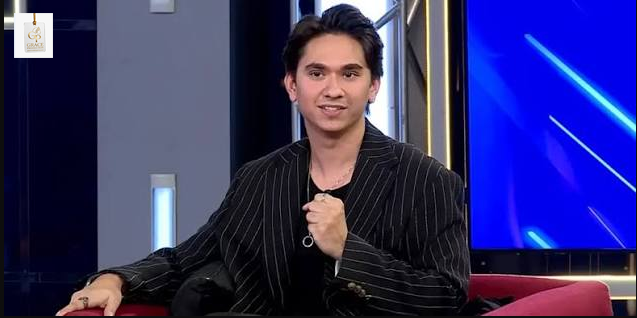
Samar Jafri dedicates his new song ‘Phir Mileinge Hum’ to the younger version of himself.

Song gets backing from fellow industry names like Raamis, Merub Ali, and Nameer Nawaz Khan.

By Mahnoor | 20-09-2026

Samar Jafri dedicates his new song Phir Mileinge Hum to his younger self
Samar Jafri dedicates Phir Mileinge Hum to his younger self

Singer and actor Samar Jafri has released a new song called Phir Mileinge Hum, which he made for his younger self. He shared the song on Instagram with an old childhood photo of himself holding a toy guitar. In the post, he said the song was “for the baby Samar.”

In the caption, Jafri talked about how people often try to meet others’ expectations and forget who they really are. He wrote, “I wish I could go back to being the carefree kid whose biggest worry was arriving at school on time.” He also encouraged his fans to stay thankful and keep the child inside them alive.

Lyrically, this song is a sad but accepting ballad. The verses think about how life is uncertain and why love doesn’t last, while the chorus shifts to giving up spiritually.

When “Phir Mileinge Hum” came out, people from the entertainment world supported Jafri. Some even shared old childhood photos of themselves with the song playing, matching its feeling.
Singer Raamis reposted Jafri’s message on Instagram. He wrote, “Releasing such beautiful melodies out of nowhere on a Friday as if it’s no big deal.”

Actor Merub Ali also posted the song on her story, along with a childhood photo of herself.

Actor Nameer Nawaz Khan did the same, sharing the song on Instagram with an AI-made picture of himself looking at his younger self in a mirror.

Phir Mileinge Hum follows Jafri’s earlier single Chalo Door Kahin, which came out in October 2025, and came after Spotify named the singer its RADAR Pakistan artist for Q4 2025.

Jafri first got attention as a child actor in the drama Parwarish, which also started his music career. He most recently appeared on Express Entertainment’s Raja London Ka, where his on-screen connection with Ameema Saleem won over fans.

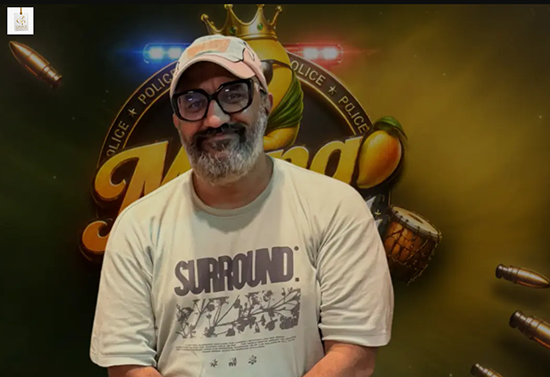
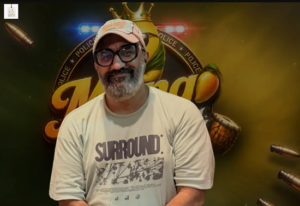
Abu Aleeha disagrees with the final version of ‘Mango Jutt’, saying he refused to approve it.

A filmmaker says he left the project because of disagreements over the edit, and he has also criticized the trailer.

By Mahnoor | 20-09-2026

Abu Aleeha discusses his disagreement with the final version of Mango Jutt
Abu Aleeha reveals he refused to approve the final version of Mango Jutt.

Filmmaker Abu Aleeha, who was earlier named as the director of Mango Jutt in promotional materials, says he left the project because he disagreed with how the final cut was edited. This comes days after the film’s trailer came out without his name shown in the credits.

The trailer, which stars Faysal Quraishi, Hareem Farooq, and Shamoon Abbasi, was released on Wednesday. In an Instagram story on Friday, Aleeha called the trailer “embarrassing to watch” and said the actual film is even worse.

Aleeha said the project was his idea, and he started working on it about three and a half years ago. He said he wrote the script, picked the actors, and got Farooq to join as both an actor and a co-producer. According to him, filming ended about two and a half years ago, and he finished the edit around four months later.

He added that Farooq’s team then suggested sending the film to India for more editing. He claimed the version that came back a year later was “very bad” and removed more than half of Ayesha Jehanzeb’s scenes, while Maira Bangash’s part was also cut down. He called the edit a “C-grade lock” and said he refused to accept it.

He also mentioned that the Punjab government gave the team 30 million rupees during that time. After that, he was asked to film extra scenes to make the funding seem justified. Aleeha said he refused, explaining that the suggested opening scene was not practical.

 Abu Aleeha said the arguments caused him to step back while the movie went on without him, and he would not have brought up his complaints if Farooq had not spoken first. He insisted that the plot, dialogues, characters, and filmed scenes came from his work, while giving credit to the whole team, and said he still thinks the film has promise.

This movie is Farooq’s first project in the Punjabi language and her first time on the big screen since “Heer Maan Ja” in 2019. No release date has been set yet.

Anayah Shahid says playing Shireen in ‘Zanjeerain’ was a risk she planned on purpose.

The actress said she intentionally picked a character that wasn’t clearly good or bad, and she thanked Sajal Aly and Shahzad Kashmiri for backing her up.

By Mahnoor | 19-09-2026

Anayah Shahid as Shireen in Zanjeerain discussing her bold acting choice
Anayah Shahid opens up about deliberately taking a risk with her role as Shireen in Zanjeerain.

Actor Anayah Shahid has talked openly about the risk she took by playing a morally complicated character for her first acting role in Zanjeerain. She said she knew from the start that Shireen would likely face criticism before viewers understood where the story was going.

In an interview with FUCHSIA Magazine, Anayah said she knew Shireen was not the usual choice for a newcomer, but she saw the role’s complexity as a chance to show what she could do. “Most newcomers get parts as a best friend or sister, which don’t leave much room for acting. So, I saw this as a big opportunity, and I kept pushing for it,” she said.

Anayah worked closely with director Shahzad Kashmiri to understand Shireen’s emotional path and get ready for how the character would change over time. “I worked with Shahzad Kashmiri to plan out Shireen’s emotional journey, and he told me early on that the character would eventually win over the audience,” she said.

However, her first day on set was not an easy start. Anayah remembered that her opening scene was a tricky sequence involving a necklace, and she depended a lot on Kashmiri’s advice as she got used to the work.

Another tough moment came while filming Shireen’s big confession scene, which was shot during Ramadan when Anayah was fasting and very tired physically. Instead of letting the tiredness hurt her work, she said the experience actually helped her feel the emotional power of the scene more deeply.

“When I first got the character, from the start of the shoot, we all knew this show would be a big success and would change all our lives,” she said.

Anayah also thanked her co-star Sajal Aly for helping her handle the nerves of joining the industry alongside a well-known actor. She described Aly as friendly and calm on set, which let her focus on her own acting instead of feeling scared.

“She makes you feel very at ease; she doesn’t make you feel awkward or tense. Even when lines had to be redone, or a mistake happened, she stayed so calm, which allowed me to give my performance in a relaxed and confident way,” she said.

She remembered that Aly was the one who made the first move to help her feel comfortable, which made things feel natural from the start. “She was very easy to talk to, and I think that was a big reason why I could do well,” she said.

When she wasn’t on set, Anayah talked about the values she wants to bring into her career, especially when it comes to being independent.

For her, having financial stability is strongly connected to being able to make her own choices. “If you want to live your life your own way, the first step is to be financially independent. After that, you can do whatever you want,” she said.

She also talked about not giving in to pressure to fit into the industry’s mold, saying she wants to stay true to herself as her career grows. “I manage to be who I am, which is very important for being genuine nowadays,” she said.

As for what’s next, Anayah said she is being picky instead of jumping into another project just to stay in the spotlight. She named director Kashif Nisar as someone she wants to work with and said she is looking for roles that add real value to a story.

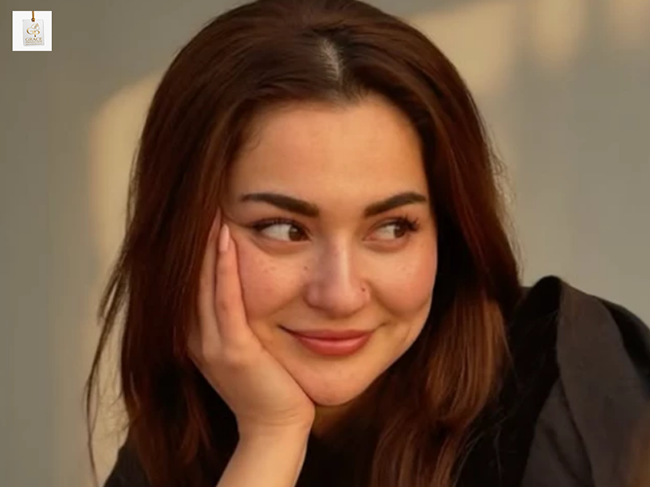
Hania Aamir criticizes the internet trend of making women’s bodies the butt of jokes.

Actor asks creators and audiences to stop making online content about women’s looks and private lives.

By Mahnoor | 19-09-2026

Hania Aamir speaks against body-shaming and jokes about women’s bodies
Hania Aamir calls out the internet trend of turning women’s bodies into jokes.

Hania Aamir has spoken against the growing habit of shaming women for their bodies, looks, and age. She called out creators who hide disrespect towards women behind fake opinions or jokes.

The actor shared a long post on Instagram, criticizing how women’s lives and appearances are turned into online content.

“In 2026, using women’s bodies, faces, looks, age, and personal lives as a punchline is silly,” she wrote. She argued that calling these remarks ‘just an opinion’ or ‘just a joke’ does not make them okay. “And saying ‘it’s my take’ does not give you permission. Neither does calling it humor.”

Aamir clearly separated real criticism from cruel behavior. “You can have a view. You can criticize. You can be funny,” she said, “But there is a very clear difference between real commentary and turning a woman’s existence into content.”

She also warned influencers and public figures, saying their words can change how people view such actions.

“Words have effects beyond the moment they are spoken. Especially when they come from people with large audiences,” she wrote. “You are not speaking into emptiness. You are shaping what others think is normal, funny, and acceptable.”

Aamir extended that responsibility to audiences too, arguing that likes, views and shares could reward the very content people claimed to oppose. “We cannot keep demanding better from society while simultaneously rewarding the very behavior we claim to be against,” she said.

Her core message was straightforward: “Women are not public property. Their bodies are not open for public comment. Their faces are not for public debate. And honestly, we should have gotten past this by now.”

She ended by urging people to stop engaging with such content altogether. “Stop giving this kind of content your attention. Stop giving it reach. Stop turning women into a spectacle and calling it entertainment,” she wrote, adding, “We can do better than this.”

Aamir’s statement comes as a number of Pakistani women in entertainment have spoken out about similar experiences of being judged.

Actor Mamya Shajaffar recently told BBC Urdu that public criticism of a woman’s clothing could become dangerous. She recalled how her appearance at a red carpet event in Berlin drew comments about her outfit rather than her work. She said this was different from how global celebrities are covered at the same events.

“When what you wear becomes something you must answer for, and based on that, whether you should live, die, be harassed, [or] raped,” she said, “it changes you deeply.”

TV host Anoushey Ashraf also spoke up in an Instagram post that has since been widely shared. She described what she called a constant “check” on her faith and way of life. “Too Muslim for some. Not Muslim enough for others,” she wrote, and asked her followers, “Can a woman just be a woman without everyone checking on her?”

Sajal Aly hints at a bob haircut as ‘Zanjeerain’ wraps up.

An actress’s offhand comment has ignited fan theories, and her new behind-the-scenes photos are bringing back memories from her filming days.

By Mahnoor | 18-09-2026

Sajal Aly hints at a stylish bob haircut after Zanjeerain wraps up
Sajal Aly teases fans with a possible bob haircut as Zanjeerain comes to an end.

Actor Sajal Aly hinted about getting a bob haircut after posting videos from her last days on the set of Zanjeerain.

The actor recently used Instagram Stories to look back at memories from filming the popular series, sharing old behind-the-scenes videos from the makeup and hair room. In one of the throwback clips, Aly seemed to think about trying a shorter hairstyle now that her work on the series was done.

She pointed to her shoulders, showing the length she was thinking of, suggesting a shorter, bob-style cut.

The casual question was enough to get fans wondering if Aly might be ready for another big change to how she looks.
Some liked the idea of a shorter cut, while others begged her to keep her long hair.

This comes after Zanjeerain finished, after keeping viewers hooked for months with its story about love, payback, family ties, and old secrets. Throughout the show, Aly’s character was at the heart of a tangled mess of relationships and feuds.

Her acting, especially in the later episodes, was often talked about by viewers, and she got praised for tough emotional scenes where Rabiya faced betrayal, sadness, and revenge.

Whether Aly actually goes through with the haircut is still unknown, but her casual remark has already given fans something new to talk about now that the series is over.

Ayesha Omar reveals that ‘Bulbulay’ was originally planned for only 26 episodes.

An actor looks back on how Hina Dilpazeer altered the course of the sitcom, while also talking about her own two-decade-long career.

By Mahnoor | 18-09-2026

Ayesha Omar reveals the original 26-episode plan for Bulbulay
Ayesha Omar shares the surprising story behind Bulbulay’s original 26-episode plan.

Actor Ayesha Omar looked back on the surprising journey of Bulbulay, sharing that the show was first planned for just 26 episodes and that Hina Dilpazeer’s role as Momo ended up changing its path completely.

Talking on Good Morning Pakistan, Omar also spoke about her 20-year career, her battles with stress and trust, her love for painting, and what she looks for in a future husband.

When Omar joined Bulbulay, there was no sign that the sitcom would become one of Pakistan’s longest-running TV shows. “I signed up for 26 episodes because Bulbulay was only meant to be 26 episodes,” she said.

According to Omar, the original idea was about three characters — Mehmood Aslam’s Mehmood Sahab, Nabeel Zafar’s Nabeel, and her character Khoobsurat — who were supposed to live together in an apartment without being married.

The format changed when Dilpazeer came on as a guest to play Nabeel’s mother. Omar said the episode got such a big reaction that the creators decided to make her a permanent part of the show.

“It was a very strange thing. All three of us lived in an apartment, so it felt odd—there was no real link,” she explained. “Then Hina came in and she married Masood Sahab and me to Nabeel. After that, it became Bulbulay.”

Omar credited Dilpazeer’s arrival as a major turning point for the show. Even though the title and music stayed the same, bringing in Momo helped shape the sitcom into the hit that audiences eventually loved.

The show kept going for years, with Omar noting, “now it’s been 17 years,” and remembering that the cast celebrated its 16th birthday last year.

But even though the show was getting more popular, Omar said she thought about quitting many times. “I kept going even though I would tell him every two weeks that I should leave it,” she said, adding that she didn’t really like working on the sitcom at first.

Looking back, though, the show became a big part of Omar’s career. Her role as Khoobsurat is still one of her most famous parts, and Bulbulay eventually came back for a second season.

Her time in showbiz actually started with music, not acting. “My first project wasn’t acting, it was a song for one of the earliest soap operas,” she said. “So I’ve really been around for twenty years.”

Over those twenty years, Omar’s look and personal style also changed.

She said that when she started out, people often pointed out how her looks had changed, including the ‘baby fat’ she had during Bulbulay. She said those changes came from her lifestyle and how she grew as a person.

“My dressing sense and physical appearance has changed. I didn’t use to plan before. But the Khoobsurat character made me change,” she said.

Behind that change, Omar said, were experiences that also changed how she saw independence and relationships. “I don’t like to get help from others. I have always been very hyper independent since I was little. I was raised by a single mother and had no father,” she said.

Omar said she believed women should let themselves accept help, especially since they often give help to others easily. “I do not know how to receive help,” she said, and added that learning to receive it was important.

The actress also said she found it hard to trust people because trust had been broken before. She said she often overthought things and worried too much about stuff.

She noticed that some of her habits came from watching her mother, who, she said, was also often stressed. But becoming aware of these habits helped her control them.

“I think a lot, and I believe I got that from my mother, because she was always stressed. But you can manage it if you realize these are just habits,” she said. “Once you notice you’re repeating them, you do it less,” she added.

Omar said she now works to help herself and her mother by focusing on the best possible outcome instead of always expecting the worst.

Aside from acting, painting was still important to Omar, and she hoped to take it up again more seriously. “I want to finish my painting degree, which I left,” she said. “I stopped painting when I started acting, but if I hadn’t, I would have stayed on my original path.”

Omar said she was a painter before she became an actress and remembered getting very high marks in school. “I was just a painter. I topped the whole subcontinent. My marks were 99%, and even at NCA, I got a distinction,” she said.

Her thoughts on relationships were just as open. When asked what she would look for in a partner, Omar said kindness was her number one priority.

She was also very direct about what she never wanted to go through again, pointing to emotional and physical abuse as absolute deal-breakers. “I put up with abuse before. I was in a relationship,” she shared.

This admission added another very personal layer to an interview that moved between her career highlights and the experiences that shaped how she sees independence, relationships, and self-worth.

Since then, Omar’s career has grown into acting, producing, and television. Her recent projects include the 2024 film Taxali Gate, and in 2026 she starred in Mera Lyari as Behnaz Baloch, also serving as executive producer. She also hosted Lazawaal Ishq, a dating reality show that debuted on YouTube in 2025.

Haris Waheed talks about feminine energy and embracing morally complex characters.

An actor shares his thoughts on his acting style, the changing landscape of Pakistani television, and what he has planned next.

By Mahnoor | 18-09-2026

Haris Waheed discussing feminine energy and morally complex characters
Haris Waheed opens up about feminine energy and embracing morally complex roles.

Actor Haris Waheed opened up in a recent chat with FUCHSIA Magazine, giving a rare, honest look at how he sees identity, acting, and the industry he’s part of.

Early on, they asked Waheed how he recognized the softer, feminine side of himself. He didn’t use labels but talked about how women felt around him and his relationships with them.

He said, “When I notice how women feel at ease with me, or how they react, or what they tell me when we talk, that’s where I catch a hint of my feminine energy.”

For Waheed, that energy also connected to the women who raised and formed him. He brought up his family, sharing moments with his sisters-in-law. He remembered giving one of them skincare items, and the butterfly clip he wore during the interview was a gift from her.

We do trade things among family members. So this is part of my feminine side, he said, calling it a natural part of the give-and-take and respectful bonds he had with the women in his life.

The talk then shifted to how he approaches acting, especially his time playing Shayan in Bas Tera Saath Ho. Waheed admitted that the character at first gave him little to work with on paper.

“Shayan’s character in the script was just a result of everything else going on in the story, really just a filler. He had no room to grow, I felt, on paper,” he said.

He gave credit to director Qasim and the rest of the crew for letting him shape Shayan beyond what was first written, turning the role into one he ended up enjoying.

Much of that process involved relying on physical details and gut feelings instead of sticking only to the script. Thinking back to a scene with Farhan Tahir, he said,

“The scene felt boring as written, so I suggested adding a physical move on the spot, making Shayan trip and fall to show the pressure building inside him, because I felt the moment needed something the dialogue wasn’t providing,” he said.

For Waheed, that instinct was part of a bigger method for making characters feel real—letting them have contradictions instead of forcing them into simple labels.

“Instead of playing Shayan as a clear-cut bad guy, I focused on his mixed traits, reacting to my co-stars and the moment rather than over-planning, so the performance felt natural instead of forced,” he said.

His acting approach, he explained, was guided more by his own beliefs than by seeking approval from others. He said he didn’t act for praise and had learned to see criticism as part of an opinion-based art form, not something to take personally.

His philosophy also shaped how he thought about whether Pakistani dramas could feature morally complex lead characters. Waheed answered without hesitation.

“Can our shows have grey heroes? Yes—grey, purple, white, blue, any kind. The audience will accept them as long as they’re entertained,” he said.

He noted that viewers were becoming more open to characters who didn’t fit the usual molds, arguing that dramas were just reflecting real life, where people rarely fall neatly into good or bad.

Waheed was also optimistic about the new wave of actors joining the field. He saw them as better trained and genuinely keen to try fresh approaches that differed from past styles.

The actor also gave a sneak peek at his next project, which is currently called Lagan Lagi. It is made by Three S Productions and directed by Bilawal Abbasi. The show features Hina Chaudhry, Saad Khan, and Ayesha Toor.

Even though it’s a long series, he said the team made it with the speed and energy of a prime-time drama, not like a usual long-running show.

For Waheed, this project was also a chance to try a different style from some of his recent work. He said, “I want to give something new, so people don’t see the ‘old style’ from me,” showing he was making a clear change as he took on this new role.

Fiza Ali writes a touching message for Faraal as she begins a new chapter in life.

Fiza Ali writes a heartfelt note for her daughter, Faraal, as she begins a new phase in her life.

By Mahnoor | 16-09-2026

Fiza Ali shares an emotional message for daughter Faraal as she starts a new chapter in life
Fiza Ali pens a heartfelt message for Faraal as she steps into a new chapter of life.

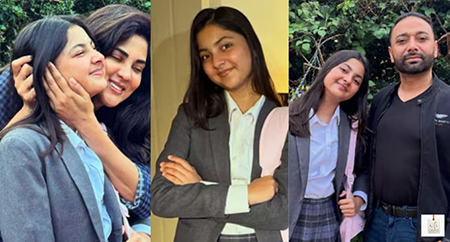
She took to her Instagram and shared a set of photos showing Faraal in her uniform with a school bag, posing for pictures. In other shots, Fiza Ali is seen lovingly hugging her daughter, and in one, she stands with her stepfather, Ejaz Khan. She added a sweet message for her daughter, “A NEW CHAPTER BEGINS FOR FARAAL”.

She continued, “My little girl is not so little anymore. At just 11, Faraal officially starts her British High School journey—a new school, a new life, a new beginning, and so many beautiful dreams ahead. As a mother, my heart is full of feelings, pride, and endless prayers”.

She added, “May Allah protect you at every step, give you confidence, knowledge, success, and a good name in this world. May you always shine with kindness, grace, and strength. Today is your first step into a new chapter… InshaAllah, one day the world will know the name FARAAL”.

At the end of her post, she wished her the best: “Fly high, my princess. Your journey has only just begun.”

Earlier this year, Fiza Ali announced her second marriage on March 22 to businessman Ejaz Khan. She shared this milestone on her Instagram and described her new life as a peaceful chapter she had been waiting for a long time.

The other day, Neetu Kapoor praised Faaral as an “ambassador of mental health.” Fiza posted a video of her daughter warmly hugging Neetu Kapoor. She introduced her daughter and said: “She is 11 years old and talked about mental health.”

In the video caption, she wrote, “Meeting Neetu Ji was an amazing experience. She is a true icon, very humble and kind. The way she appreciated Pakistan, encouraged my daughter Faraal, and praised our mental health awareness work truly moved us.”

She added, “Her words to my daughter: ‘I’m proud of you. Keep speaking up for mental health. One day you’ll be a global ambassador for this cause’ are something we will never forget.”

The Pakistani actress and model first married businessman Fawad Farooq in 2007, and Faraal was born in 2014. The couple divorced around 2017.