An actor talks about working hard, facing challenges in the career, and staying humble despite the glitz and glamour of the entertainment industry.
By Mahnoor | 16-11-2026
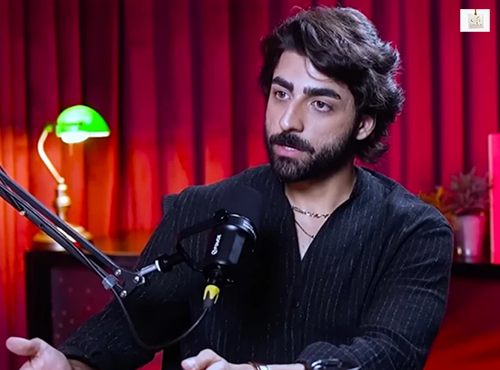
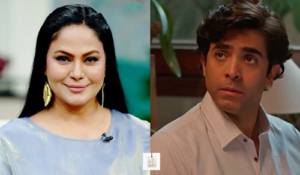
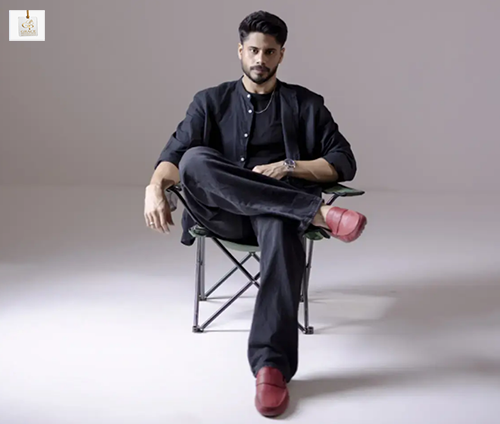
Nameer Khan shares how he left his IT career behind to pursue his passion for acting.
Actor Nameer Khan has talked about his unusual path into the entertainment world, sharing how he moved from working in IT to acting, the difficulties he faced in making a name for himself in showbiz, and how he goes about learning his craft.
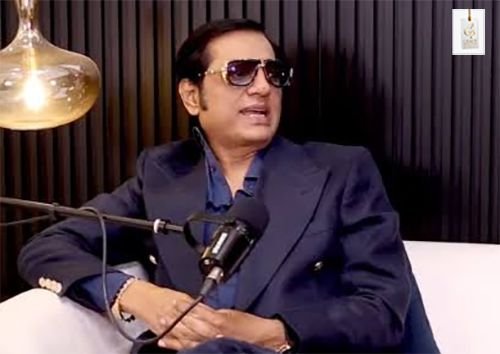
In a chat with Ahmed Ali Butt, the actor opened up about his early school days and how those experiences influenced the way he handles challenges in his career.
“Before I entered this field, when I was in IT, I was a student who knew he wasn’t naturally smart, but he had to work hard. If it took someone else two or three hours to pick up something, it would take me two or three days,” he said.
“I learn slowly, and I know I need to put in the effort. But things like fame, fans, and glamour—I try to keep away from those. This is only the beginning,” he added.
Khan, who has acted in dramas like Qarz-e-Jaan and is currently playing Zamil in Dar-e-Nijaat, also talked about the chances he’s gotten and the people he’s had the luck to work with. “I haven’t learned a lot yet, but if I get the chance to work with such directors, I don’t want to waste that opportunity,” he said.
Thinking about how competitive this field is, he added: “The competition is tough, there are many people waiting in line, and I feel that when someone gets recognition after going through struggles, they’ll appreciate that success and understand that hard work really matters.”
Talking about his role in Qarz-e-Jaan, Khan credited his director for helping him grow. “I’m not a trained actor. I give that credit to Saqib Saab,” he said, referring to director Mohammad Saqib Khan.
Khan’s start in entertainment wasn’t part of a typical acting career plan. Talking about his background and how he got into showbiz, he said: “My father’s side is in business, and my mother’s side are either engineers or doctors.”
He added: “In 2015, I had a job, but I got bored. My hobby was going to the gym and staying neat and well-groomed. Then I realized I wasn’t enjoying my job. Later, I found out about an agency and how you could get into commercials and fashion shoots. I decided to give it a try.”
One of his first chances was a small role in a Coke ad with actors Sajal Aly and singer Momina Mustehsan. Directed by Asim Raza, that shoot was his first time on a professional set.
Remembering how that experience changed his view of showbiz, Khan said: “When I went through that, I thought the salary I earn for 30 days of hard work as a software engineer is nothing compared to what they paid me for just one day of acting.”
Even though Khan was looking into business opportunities, he kept studying and went to Montreal, Canada, in 2018 to get a master’s degree.
His early days in front of the camera also showed him that modelling and acting are not the same. Thinking back on his first jobs, he said:
“In 2023, I worked on a drama, but before that, I did a web series. I was really nervous and thought photoshoots are one thing, but acting is something else. I wasn’t scared of the camera, though—I was scared of the acting. The two are very different.”
His choice to follow an unusual career path was also backed by his family. Talking about how they reacted, Khan said:
“My parents are very supportive, and when they support, everyone else follows,” he added, saying that his family was happy to see him trying something new.
Khan also talked about the practical changes he had to make for acting, especially spending time in Karachi. Even though several of his projects were in Lahore, he said he started going to Karachi in 2021, visiting production companies and eventually getting an apartment there to look for opportunities.
Beyond acting, the actor talked about how social media is becoming more important for building a career. He stressed that performers need to have a presence outside of traditional entertainment platforms.
“I think that besides this industry too, it is important to have a digital asset to pass on,” he said. He added that he had tried different kinds of YouTube videos, like vlogs, as part of his efforts to build an online presence.
Talking about the industry’s growing focus on digital reach, Khan said: “I cannot deny that numbers do not matter. Your skill set and numbers have to be good, and then you will automatically get chosen.”
Despite his growing work in television, Khan said his inspiration for entering the entertainment industry came from cinema.
Remembering the films and performers that sparked his early interest in acting, he said:
“My inspiration for coming into this field was cinema. When I used to watch movies and leave the theatre, I used to get a feeling of ‘why can’t I do this?’ My inspiration came from there, and as I grew up, I watched films with actors like Humayun Saeed, Fahad Mustafa, and Fawad Khan,” he said.
However, Khan said he preferred to approach his roles through his own understanding rather than copying other performers.
“I always thought of myself as different. If I look at others and act, I will get stuck. Whatever script I get, I learn that way, not from watching others. I feel that affects your character,” he said. “I don’t think I’ll watch Fawad Khan’s scene and think I want to copy it,” he concluded.
Khan is now most famous for playing Zamil in Dar-e-Nijaat, a role whose tangled relationships and questionable decisions have made him a hot topic among viewers.
His performance has also started discussions about responsibility and how men behave toward women in relationships. The actor has talked about his character’s actions before, telling men to be respectful and truthful.
An actor talks about being emotionally open and the criticism her character’s choices received in “Dar-e-Nijaat.”
By Mahnoor | 16-11-2026
Durefishan Saleem opens up about love, heartbreak, healing, and her experiences in the Pakistani entertainment industry.
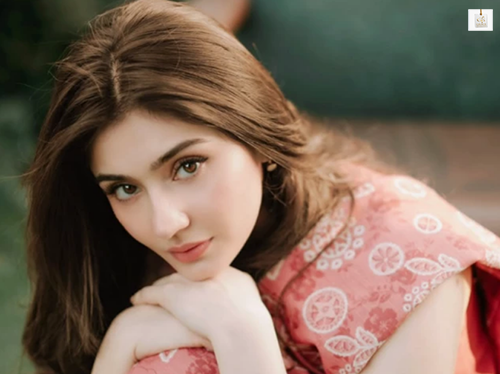
Actor Durefishan Saleem has talked openly about the deep emotions behind her character Zaryab in the popular show Dar-e-Nijaat. She addressed the criticism about Zaryab’s choices, how audiences reacted to her relationship with Sheheryar Munawar’s character Abu Bakr, and the big questions the story asks about love, self-value, and healing.
In an interview with Khaleej Times, she talked about the emotional ups and downs that guide Zaryab’s path, and explained that playing a character doesn’t mean she agrees with everything that character does. She said she was especially interested in the real human experience of how heartbreak can damage a woman’s sense of who she is and her own worth.
“With Zaryab, I was drawn to the very real human situation of what happens when a woman is broken by someone she loves. She might start blaming herself, forget her own value, or find it hard to recognize the person she has become. That doesn’t mean the story says her pain is okay; it might just be trying to understand it,” she added.
Durefishan said an actor’s job is to show a character truthfully, not to tell people how to feel about her. “I don’t believe an actor’s role is to tell the audience what to think. It’s to bring a character to life honestly enough that people feel they must think about her on their own,” she added.
The talk around Dar-e-Nijaat has gone beyond just the show, with viewers debating Zaryab’s choices and what her bond with Abu Bakr really means.
Durefishan says the audience’s response shows they’re connecting with something deeper than just the story. “People aren’t just watching Zaryab and Abu Bakr; they’re thinking about their own views on love, pain, healing, and what people should give each other,” she said.
She also backed Abu Bakr’s character, especially his kindness and emotional maturity, which made some viewers wonder if such a person could exist in real life.
“He shows a kind of gentleness that audiences rarely see. People might think he’s too good to be true, but I don’t believe kindness, patience, and emotional maturity should be seen as fake,” she added.
Talking about relationships and what society expects from independent women, Durefishan said love should be about being together, not about finding someone to complete an already full life.
“When a woman is independent and has built her own life, she’s not necessarily looking for someone to complete her. She wants someone to share the life she’s already made.”
She also pointed out the emotional pressure on women who are seen as strong and self-sufficient, noting that being independent doesn’t remove the need for love and support.
“Maybe the hardest thing to ask for is the chance to be weak. When people see you as strong, successful, or capable, they sometimes forget that you also need comfort, tenderness, and a safe place to break down,” she said.
For Durefishan, a healthy relationship is one where kindness doesn’t depend on how much a person can put up with. “The most beautiful kind of love is one where you don’t have to be strong all the time to get gentleness,” she said.
Talking about Zaryab’s willingness to compromise in relationships, the actor made a clear difference between understanding a partner and giving up who you are just to keep the relationship. “The key is whether that compromise comes from true understanding or from being scared of losing someone,” she said, adding, “There’s a clear difference between adjusting what you expect and throwing away your own values.”
Durefishan also said that if someone keeps pushing down their feelings or doubting their own worth just to keep a relationship going, it’s time to think seriously. “When you keep quiet over and over, or question your value, or turn into someone you don’t even recognize just to keep a relationship alive, I think it’s worth asking what you’re really holding onto,” she explained.
She went on to say that love should help you grow as a person, not force you to lose yourself. “Love should let you evolve, not make you vanish. You should be able to look in the mirror and still know the person looking back at you.”
The actor also questioned the common belief that healing means completely forgetting someone who mattered a lot in your life.
She said, “We use the phrase ‘moving on’ as if healing means reaching a point where someone no longer matters to us. I’m not sure that’s always true. Sometimes a person changes you, and that experience becomes part of your story, even when that person is no longer part of your life.”
She explained that letting go is about taking back control of your life, not about erasing the memories tied to a relationship. “Letting go is less about forgetting someone and more about not letting that experience define you anymore. Maybe healing means learning to look back without wanting to go back,” she added.
Away from the talk about Zaryab, Durefishan also shared her career goals and her thoughts on the future of Pakistan’s entertainment industry.
While she recognized the wide reach of television and its dedicated viewers, she said the industry still had a lot of room to grow in terms of storytelling and production methods.
“Television in Pakistan has given us great reach and a very loyal audience, but chances to try different genres, complex characters, and new ways of telling stories are still growing,” she said.
She also expressed frustration with how much control television channels have over creative choices and the limited space for independent producers. “Channels own everything, and the loss of independent producers and the way channels dictate is frustrating for me as an actor,” she added.
Even though she wants to try movies and streaming shows, Durefishan made it clear that switching formats wasn’t a goal by itself. “It’s not just about working in cinema or OTT for no reason. It’s about finding stories that challenge me in new ways,” she said.
With Zaryab, Durefishan seems interested in exploring a tough but familiar emotional truth: how a broken heart can mess with a person’s sense of who they are, and how healing means finding yourself again.
Instead of telling viewers whether her character’s choices are right or wrong, the actor believes the story should push people to think about the feelings and situations behind those choices.
In an exclusive chat with Images, the British-Norwegian DJ shares how the song was made, his quick 24-hour trip to Lahore, and why Pakistani music can shine worldwide.
By Mahnoor | 14-11-2026
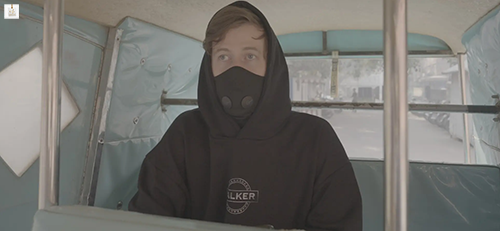
Alan Walker believes Pakistani music has the potential to reach international audiences as he shares his version of Alfaaz.
Zain Zohaib and Hamza Malik released a new song on Thursday. They worked with DJ and producer Alan Walker and singer-songwriter James Arthur. This is a remix of their big hit ‘Alfaaz’. The remix includes Walker’s special electronic dance music style and Arthur’s singing.
‘Alfaaz’, the original song, has been very successful. It reached the top spots on Spotify’s daily music charts in Pakistan and India. It even made it to the weekly top 50 chart.
To learn more about the remake called ‘Alfaaz (Alan Walker Relight)’, Images talked to Walker. They discussed the song, his experience working in Pakistan, and his first thoughts about the country.
Combining Eastern styles with EDM
The DJ admitted it wasn’t easy: “It was tough because this music style is very different from what I usually do.” But he thought he had blended the unique Eastern style of ‘Alfaaz’ with his own in a way that appeals to both EDM fans and people who don’t listen to much EDM.
How did the collaboration start? Walker said it began with both sides being interested and having an idea. “We heard the song a bit here and there. It felt like it was everywhere. We were already traveling around Asia, and then we got the idea to remake or remix it. Suddenly, my team contacted me and asked, ‘Hey, want to go to Pakistan?’ And I said, ‘Sure, yeah, why not?'”
Speeding up the process
Walker said it only took a few weeks for the song to come together, from the day he was first asked to the final release. “It’s the fastest we’ve ever made any song. I think the last time I made a song this quickly and got it out this fast was when I was about 16, making music for fun with no record label, just putting out music I liked.”
In less than a week, the first demo was done, and after another week and a half, James Arthur was confirmed to sing on the track.
“When we were there, we were working on the final details,” Walker said about his time in Lahore. “Within a day or two after the trip, we got the last vocals from James Arthur.”
That matched the deadline the team had to send the song to Spotify. “That also shows how fast everything moved. There were many small pieces that had to fit together, but it all went incredibly quickly.”
How it happened
Muhammad Ibrahim, the co-founder of Giraffe Pakistan — along with Zulfiqar J. Khan (also known as Xulfi) — the studio that made ‘Alfaaz’, said the Pakistani and international teams worked well together because they “agreed on exactly what they wanted from it”.
Ibrahim said they had contacted Walker’s team to ask if they wanted to work together, but the idea to bring Walker to Pakistan came from his own team. “It would be amazing — if we could actually have him here,” they told his team, according to Ibrahim.
When it happened, he said, “Nobody had time to really plan anything… Everything went so fast and naturally.”
Alan Walker shares his take on Alfaaz and explains why he believes Pakistani music deserves global recognition.
The DJ was impressed by how his collaborators were fully on board, making time and space in their own schedules to help the process move along.
A love affair with Lahore
For his trip, Walker said he only had 24 hours, so he was taken from the plane to the hotel and then straight to Old Lahore, where his first shoot was at the historic Lahore Fort. He described the fort complex next to the Badshahi Mosque as similar to the Taj Mahal—both being famous examples of Mughal architecture.
“That’s when we got to see the real beauty of Lahore … I’m so glad we got to feature some of Lahore’s most famous spots in the music video,” he said.
The DJ said he had an unforgettable time working with the team in Pakistan and was happy to meet them in person. “I think it was really key for our collaboration and for the project we wanted to do with ‘Alfaaz’ to actually go meet the people, meet the team, meet the artists, and just build that connection.”
“It was a lot of fun, I loved working with everyone, and they were all super kind, welcoming me and my crew with open arms,” he shared.
As is usual for Pakistanis, the hosts took him out for a big group lunch, where the Norwegian enjoyed halwa poori, which he said he liked.
Pakistani music can make it globally
Walker felt really positive when the project finished. He said his experiences showed that “Pakistani music really can become famous worldwide, and it already has started to do that”.
He also said he would be open to working with Pakistani musicians again: “Anything is possible. We are very welcoming, and it will be interesting to see what we can do in the future and in the coming months.”
Ibrahim explained more about Giraffe Pakistan’s part in the work. He said the team wants to “build a support system inside the country to… make global partnerships or collaborations, or set up ways to share and promote music so songs can reach people outside Pakistan and around the world.”
He said, “I can’t thank Alan and his team enough… they have helped us so much, with open arms and lots of kindness.”
The model-turned-TV host calls Durefishan Saleem’s character a ‘red flag’ and says Sheheryar Munawar’s Abu Bakar deserves a better wife.
By Mahnoor | 14-11-2026
Nadia Hussain gives a blunt take on Dar-e-Nijaat’s Zaryab, suggesting therapy instead of marriage.
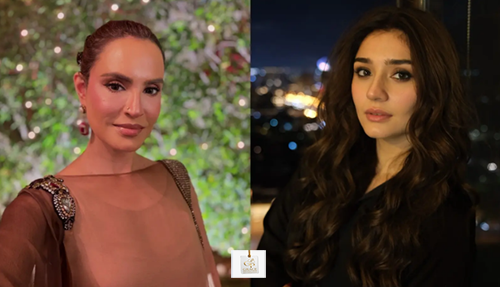
Everybody’s talking about the hit drama series Dar-e-Nijaat, and now Nadia Hussain is the latest star to share her thoughts online about the show’s main couple, Abu Bakar (played by Sheheryar Munawar) and Zaryab (played by Durefishan Saleem).
In a video she posted on Instagram on Thursday, the former model called Zaryab “a total red flag.”
Hussain said, “Looks can be really misleading, so if we judge Zaryab’s character based on her beauty, that wouldn’t be fair.”
She said it’s wrong to force a girl to marry a bad man just because his parents think marriage will fix him. But it’s also wrong to marry someone like Zaryab to someone like Abu Bakar and ruin his life.
“What Abu Bakar is going through is more than any normal man should have to put up with,” the model said. “Zaryab didn’t need to marry a man to fix her life… She’s so toxic that honestly, I wouldn’t wish that kind of life or wife on any man.”
Hussain said that when we talk about feminism and equality, we must understand that men shouldn’t have to deal with this either. And the fix for women like Zaryab isn’t marriage; she needs therapy.
“They need to be told the reasons for what happened in their lives… so they can heal on their own journey; it should be self-healing, not getting married and wrecking a man’s life,” Hussain said.
The TV host said she believes love can heal a lot, but it’s wrong to expect a man to put up with a toxic woman like Zaryab, “nor should they; women shouldn’t either.”
“Let’s get the facts straight, let’s get our feelings right, let’s get our view on relationships right,” she said. “We need to see that relationships are fragile and that dealing with such extreme toxicity is beyond love. This is torture. Zaryab is torturing Abu Bakar.”
Hussain said a man like Abu Bakar deserves a better wife and a balanced relationship where both partners understand and respect each other’s limits. She urged people not to “promote toxic relationships.”
If you haven’t been watching the show—or the endless online talk about it—Dar-e-Nijaat is about Zaryab, who gets dumped by her high school love Zamil (Nameer Khan), and she really struggles to move on.
Her parents marry her off to a kind, religious family friend Abu Bakar, and their on-screen relationship has stirred up online debate, splitting viewers across Pakistan over the characters and how they relate to each other.
The show’s main couple is a big topic, especially on weekends when the show airs.
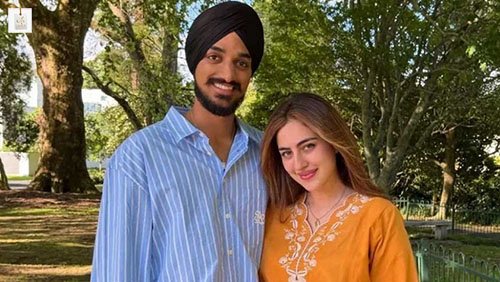
Indian cricketer Arshdeep Singh and actor-model Samreen Kaur are now engaged. The couple shared the happy news on Wednesday with a joint Instagram post, making fans and well-wishers celebrate.
By Mahnoor | 13-11-2026
Indian cricketer Arshdeep Singh and actor-model Samreen Kaur reportedly announce their engagement.
They posted a series of pictures from their special moment, along with a heartfelt message that said, “And of all the things life could have given us, I’m the happiest it gave us each other. To a lifetime together. 11.11.2026 (hi fiance).”
The post quickly grabbed fans’ attention, and congratulations and good wishes poured in for the newly engaged couple.
Arshdeep Singh and Samreen Kaur are in a relationship
The engagement comes months after Arshdeep made his relationship with Samreen official on Instagram in July 2026. The cricketer had shared pictures with the actor-model, introducing her to his followers with a simple yet cute caption, “My Person”.
However, their relationship had already become a topic of discussion on social media long before the official announcement.
It all began when Arshdeep shared a Snapchat picture where he was seen holding hands with a girl without showing who she was. Internet users were quick to figure it out and identified the mystery girl as Samreen Kaur.
Indian cricketer Arshdeep Singh and actress Samreen Kaur reportedly celebrate a new chapter in their relationship with an engagement.
Soon after, videos of the two walking hand in hand on the streets of Dharamshala also appeared online. In one of the videos, Arshdeep was even seen trying to stop someone from filming them, which made people even more curious about their relationship.
Who is Samreen Kaur?
Samreen Kaur is an actor and model who has been part of the entertainment industry. She has appeared in films like 83 and Sardaar Ji 2 and has also been in several music videos.
While Arshdeep continues to make his mark on the cricket field, Samreen has been growing her presence in the entertainment industry.
Pakistani actress Dananeer Mobeen has given the country’s entertainment industry another reason to celebrate by winning the Best Actress award at the second International Eurasian Film Awards, also known as the Diamond Butterfly Awards, held in Moscow, Russia.
By Mahnoor | 13-11-2026
Dananeer Mobeen wins Best Actress Award in Moscow for her outstanding performance in Mera Lyari.
The actress won an international award for her amazing acting in the Pakistani movie Mera Lyari, which has brought new attention to Pakistan’s growing role in world cinema.
Her win is an exciting accomplishment, not just for Dananeer but for everyone involved in the film. Getting recognized at an international event is a special moment for any performer, especially when the honor comes from a platform that celebrates movies and creative talent from around the globe.
The award has also created a buzz among Pakistani entertainment fans, who are cheering for the actress’s success and feeling proud to see a Pakistani performer recognized on a global stage.
Dananeer Mobeen Wins Best Actress at the Diamond Butterfly Awards
The second International Eurasian Film Awards brought filmmakers, actors, and other creative people together in Moscow to honor great work in movies. This year, one artist who got attention was Dananeer Mobeen. Her performance in Mera Lyari won her the Best Actress award.
For Dananeer, this award is a big step in her career. She is already known in Pakistan’s entertainment world, but this international recognition lets her work reach many more people.
Her role in the film stood out from the other nominated works, which earned her a spot among the event’s celebrated artists. This success also shows that Pakistani performers are slowly getting more chances to show their skills beyond local TV and films. A
wards like the Diamond Butterfly can help introduce actors and filmmakers to audiences who might not have watched Pakistani movies before. That makes Dananeer’s win especially important for the country’s entertainment industry.
Why Mera Lyari Is an Important Film for Pakistani Cinema
Mera Lyari has become an important part of this success because it helped bring global attention to Pakistani storytelling. The film’s recognition at the Moscow awards shows that local productions can compete for attention at international events.
Lyari is a well-known area of Karachi, often talked about in relation to its history, culture, social challenges, and strong community identity. Stories from this neighborhood have the potential to give audiences a different view of life in Pakistan.
Films that explore real communities and their experiences can build strong connections with viewers. They also let international audiences understand different parts of Pakistani society beyond the images they usually see in mainstream media.
Dananeer Mobeen’s award has added more recognition to the film. Her performance has helped bring Mera Lyari into the spotlight, giving the project more visibility among movie lovers.
The film’s international recognition is also encouraging for Pakistani filmmakers who want to tell stories based on local experiences while reaching viewers across the world.
Two Pakistani Films Receive Nominations in Moscow
Another positive sign for Pakistan was that two local films were nominated at the second International Eurasian Film Awards.
The nominated Pakistani films were:
Mera Lyari
Welcome to Punjab
Two Pakistani films being nominated at an international awards event is a good sign for the country’s movie industry. It shows that Pakistani productions are slowly getting chances to be part of talks happening beyond the local entertainment scene.
While winning an award is always a special honor, getting an international nomination also matters. It gives filmmakers a chance to show their projects to new audiences, meet industry people, and gain recognition for their creative work.
The nominations of Mera Lyari and Welcome to Punjab also show the different kinds of stories Pakistani filmmakers are telling. Such representation can lead to more investment, partnerships, and interest in local cinema.
Dananeer Mobeen’s Growing Recognition as an Actress
Dananeer Mobeen first became famous on social media, where her natural style and memorable online presence caught a lot of attention. Her popularity soon opened doors in Pakistan’s entertainment industry, letting her try acting and take on new career chances.
Moving from social media fame to acting is not always easy. Performers often have to show they can do more than just entertain people with short videos and online posts. They must prove they can understand characters, express feelings, and add to a full story.
With her award for Mera Lyari, Dananeer has reached another big goal in her acting career. The Best Actress award gives her a great chance to be recognized for her skill, not just her fame.
It also raises expectations for her future work, since viewers will naturally want to see what kind of characters and stories she picks next.
A Proud Moment for Pakistan’s Entertainment Industry
Dananeer winning Best Actress is not just a personal win. It is also a good moment for Pakistan’s entertainment industry, which is trying to grow its presence in global markets.
Pakistani TV dramas have already gained viewers in many countries, and local films are also looking for chances to reach audiences beyond the region. International film festivals and award shows can help a lot in this by giving filmmakers a stage to show their work.
Being recognized at events like the Diamond Butterfly Awards can push actors, directors, writers, and producers to keep trying new ideas. It can also inspire new artists who want to build a career in films.
For Pakistan, international recognition is important because it helps fight the idea that local movies have a small reach. Skilled performers and creative teams can make work that connects with people from different cultures.
Dananeer’s success reminds us that Pakistani talent deserves chances to shine on global platforms.
Fans Celebrate Dananeer Mobeen’s International Achievement
The news of Dananeer’s win has made Pakistani showbiz fans very excited. Her success means a lot, especially to those who watched her grow from a social media star into an actress known around the world.
The award has also put the spotlight back on Mera Lyari and everyone who worked hard to bring the film to audiences.
For many people in Pakistan, seeing a local actress win Best Actress in Moscow is a big reason to celebrate. It shows the hard work that goes into making films and why it’s so important to give talented actors a chance to shine.
What This Award Means for Dananeer’s Future
Winning an international Best Actress award can become a big milestone in an actor’s career. It can boost industry interest, bring new chances, and push performers to take on harder roles.
For Dananeer Mobeen, this Diamond Butterfly honor could open doors to more varied projects ahead. But her next moves matter just as much as this win. Strong scripts, deep characters, and steady performances will help her keep growing as an actress.
Her success also gives hope to young Pakistani artists aiming to make it in cinema. Recognition isn’t always quick, but chances to show talent can truly change things.
Dananeer Mobeen’s Best Actress award for Mera Lyari at the second International Eurasian Film Awards in Moscow is a real proud moment for Pakistani entertainment. With Welcome to Punjab also among the nominated films, the event has given Pakistani cinema another shot at global attention.
As the celebrations go on, one thing is clear: Dananeer’s win has put her film and Pakistani talent in the world’s spotlight, making this a memorable day for the country’s showbiz.
From Wahaj Ali’s hard work to Baala’s changing identity, the actress gives a behind-the-scenes look.
By Mahnoor | 12-11-2026
From Wahaj Ali’s commitment to Baala’s transformation, a fascinating look at the hard work behind the scenes.
Pakistani actress Amar Khan has shared some fun and interesting behind-the-scenes stories about the hit drama Mitti De Baway. She gave fans a closer look at the hard work, planning, and creative choices that helped create the show’s unforgettable moments. In a relaxed chat, she praised her co-star Wahaj Ali for how deeply he got into his role as Iqbal Channan, and she talked about the emotional depth that made the story so captivating.
During a talk with Hassan Chaudhary on Something Haute’s Heart to Haute, Amar opened up about all the effort that went into bringing the characters to life. She shared details about Wahaj’s tough physical transformation and the deep feelings she brought to her own scenes, giving fans a better idea of what really went on behind the camera.
She also discussed how Baala’s character changed over time, Zarina’s complicated emotional path, and the praise she received from some of Pakistan’s most famous actresses.
Amar Khan Believes Wahaj Ali Was the Perfect Choice for Iqbal Channan
One of the biggest highlights of Amar Khan‘s talk was her praise for Wahaj Ali. She said he was the perfect pick for the role of Iqbal Channan, and she could barely picture anyone else playing it with the same strength.
Wahaj is known for taking roles that need deep feeling and hard work. But according to Amar, his effort in Mitti De Baway went further than just learning lines or acting in front of the camera.
She liked how seriously he took the character, and she thought his work was key to making Iqbal Channan seem real.
For Amar, choosing the right actor was very important because Iqbal Channan wasn’t a simple character. His traits, look, and emotional growth needed someone who could handle all sides of the part well. She believed Wahaj gave exactly what the role needed.
Wahaj Ali Continued Shooting Despite a High Fever
Amar also shared an interesting secret about how Wahaj Ali got his body ready for Mitti De Baway. She said that the actor kept working even when he had a very high fever.
She explained that his hard work didn’t stop after the cameras were off. Once his shooting was done for the day, Wahaj would go straight to the gym to keep working on changing his body.
That tough schedule often meant he didn’t get enough sleep, just so he could look right for the role of Iqbal Channan.
This shows how much effort it takes to make a character on screen seem real. People usually only see the final acting, but they rarely see all the physical work and personal sacrifices made behind the scenes.
Amar’s words gave fans another reason to value Wahaj’s hard work. His acting wasn’t just about saying strong lines, it also meant changing his body to fit what the character needed.
Amar Khan Talks About the Famous ‘Chan Kithan Guzari’ Scene
Another interesting part of the interview was when Amar talked about the memorable scene ‘Chan Kithan Guzari’, which she shot with Wahaj Ali.
She said this scene is very special to her because it was filmed on her first day working with Wahaj. She also shared that her role did not have many scenes, so this chance meant a lot to her.
Instead of treating it as just another scene, Amar wanted to make sure her performance stood out. She put a lot of thought and effort into it, hoping to create something that audiences would remember.
Her words show how actors sometimes prepare deeply even for a small amount of screen time. A memorable scene does not always depend on how long it is. Sometimes, a few well-done moments can leave a bigger impact than several minutes of dialogue. Amar’s experience with this scene shows that idea well.
The Changing Identity of Baala and His Emotional Struggles
Apart from acting, Amar Khan also talked about what Baala’s character truly means and how his emotions change in a complicated way.
One big question fans ask is why Baala never said sorry to Zarina. Amar explained that it relates to how his identity shifts and how he grows emotionally distant as he changes into different versions of himself.
She described his journey from Iqbal Jee to Iqbal Channan and then to Baala Gujraitiya. Every new identity marks a different phase in his life, but these changes also push him further away from who he originally was.
This growth makes the drama more interesting. Instead of just showing Baala changing his name or looks, the story looks at how different life situations can affect a person’s actions and how they see themselves.
His failure to apologize to Zarina can also be understood through this emotional complexity. His actions leave the audience wondering about his true personality, what he regrets, and how he sees relationships.
Amar’s thoughts give us a deeper look into why this character was written this way.
Amar Khan Hints at More Difficulties in Zarina’s Story
Amar also talked about Zarina’s story in Mitti De Baway. She said the character’s tale is not fully finished, and there are still some loose ends to tie up.
Zarina’s experiences have already added emotional tension to the drama, but Amar hinted that viewers might see even tougher moments ahead as the plot moves forward.
Her words suggest that the character still has big problems to face. These unsolved conflicts could lead to more emotional clashes and changes involving the people close to her.
For fans who have followed Zarina’s story closely, this news makes what comes next even more exciting.
Instead of spilling all the details, Amar gave a small peek into the character’s ongoing path, leaving viewers curious about how her situation will finally turn out.
Durefishan Saleem, Mahira Khan and Maya Ali Appreciate Amar Khan’s Performance
Apart from talking about the drama and her co-star, Amar Khan also spoke about the praise she got from other actors.
She said that getting supportive messages from well-known actresses like Durefishan Saleem, Mahira Khan, and Maya Ali made her truly happy.
For an actor, praise from co-workers can be very special. These are people who know how hard it is to play tough roles and tell emotional stories on TV.
Amar explained that the messages meant a lot because they came from artists she looks up to. Their kind words made her feel that her hard work on the project was seen and valued.
Such support also shows how performances can start talks beyond just the screen. When fellow actors appreciate someone’s work, it adds extra joy to the whole experience.
Amar Khan’s Interview Gives Fans a New Perspective on Mitti De Baway
Amar Khan’s appearance on Heart to Haute was more than just talking about the drama’s story. It showed the preparation, creative thinking, and emotional depth needed to bring the characters to life.
Her praise for Wahaj Ali pointed out the physical hard work behind Iqbal Channan, while her memories of the ‘Chan Kithan Guzari’ scene showed how much she cared about making her short screen time unforgettable.
The talk about Baala’s changing identity also gave a deeper look into the character’s emotional pain and his complicated bond with Zarina.
Also, her comments about the praise she got from Durefishan Saleem, Mahira Khan, and Maya Ali added a personal feel to the chat.
For fans of Mitti De Baway, these behind-the-scenes details make the performances even more interesting. They also remind viewers that memorable TV moments often come from a lot of effort, smart creative choices, and the hard work of everyone involved, both on screen and behind it.
Malik believes that idealism, when you live only in a fantasy, can ruin your life.
By Mahnoor | 12-11-2026
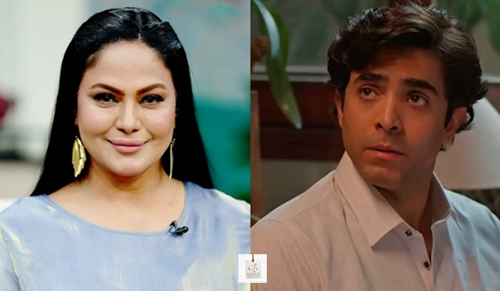
Veena Malik humorously warns fans not to expect Abu Bakar from Dar-e-Nijaat to come to their rescue.
Everyone loves Dar-e-Nijaat’s Abu Bakar. Viewers often call him the ultimate green flag of a man, and the character played by Sheheryar Munawar has become Pakistan’s national crush. It seems like every girl wants a partner just like him.
Abu Bakar is known for being endlessly patient, even when his wife treats him badly. He is obedient to his mother to a fault, and people count on him to solve their problems.
Now, TV host Veena Malik wants to bring the Abu Bakar fan club back to reality with a simple message: he’s not real, and he definitely isn’t coming to save you.
Malik talked about this with Aeysha Imran Murtaza, a director at the Fountain House Institute of Mental Health, on her show Veena Hai Na.
Murtaza said they hear hundreds of cases from people who come to them. She called the fantasising of the ‘perfect man’ an “important issue” that forms the background for many people’s mental health struggles.
The guest mentioned a case of a girl who came to the institute feeling depressed after her marriage did not turn out as she had expected.
“She first thought [her groom] was like Abu Bakar. But as soon as she had to do chores around the house, realized she needed to manage a home, saw her ‘Abu Bakar’ had many duties and was tired when he came back … the Abu Bakar from the drama started to disappear, and now she’s depressed,” she said.
Both women agreed that the idea of a perfect happy ending was not realistic. Murtaza said that while everyone has the right to dream and wanting an ideal is not wrong, Pakistan’s young people are not taught “the skill” of turning those dreams into reality.
“Idealism, if you only live in a fantasy, can really destroy your life,” Malik said, and her guest agreed.
Murtaza explained that the key to a good relationship is being understanding and caring for each other, especially when life gets hard.
The ideals shown by Abu Bakar do a bad service to both men and women. Munawar himself has spoken about the character, pointing out his habit of pleasing others and his urge to save people. “Think about the pressure this man lives with,” he told the BBC’s Haroon Rashid in an interview last month.
Murtaza warned about the lasting effect media can have on children even when they grow up, and advised parents to keep track of what their children watch, and to talk with them about what they found most interesting in that media.
She suggested that parents ask their children about the good and bad points of any characters they admire, to help place those characters in the real world.
Pakistan’s biggest internet event was a night full of famous people.
By Mahnoor | 11-11-2026
Fahad Mustafa and Hasan Raheem celebrate their wins at Pakistan’s first Influencer Awards.
Some of Pakistan’s biggest social media stars came together at Karachi’s Expo Centre on Saturday night for the first-ever Pakistan Influencer Awards.
Fashion designer Hassan Sheheryar Yasin, actors Rabab Hashim and Dino Ali, and comedian Faiza Saleem hosted the glamorous event. The awards were based on months of looking at performance data, judging by experts, and voting by the public, with prizes in over 30 categories.
Speaking at the event, lead organizer Talha Aslam shared his goal of creating an annual platform that “sets clear and meaningful standards for recognizing talent in Pakistan’s creator economy.”
Salman Iqbal, head of the ARY group, said, “Creators and mainstream media now reach the same audiences, and the best ones deserve recognition that meets global standards of trust and quality.” He called the awards “a meaningful step towards giving Pakistan’s creators the status they have earned.”
Of course, the true stars of the night were the winners from the many award categories. So, without any delay, here are the winners of the first Pakistan Influencer Awards:
Nowadays, everyone loves actors who play characters that aren’t clearly good or bad.
By Mahnoor | 11-11-2026
Haris Waheed chooses his passion for acting over the desire for fame.
When I meet Haris Waheed at a coffee shop, he is dealing with a leg injury, but he still shows up on time. No one crowds around him, and there’s no fuss over the character that had TV viewers talking—some disliking him, some laughing at him, yet all waiting to see what he’d do next.
Haris seems unaware that this could also happen in a public place. He recently played Shayan in ARY Digital’s Bas Tera Saath Ho (BTSH), a privileged, morally weak young man who could manipulate others, go to extremes to get back at an insult, make bad choices, and then brush off criticism with a joke or a cheeky comment.
With the drama now over, Shayan’s story gives us a chance to think about what made him so interesting to watch.
Haris sits back, gets comfortable, and starts our talk about the work behind a role that was never meant to be simple.
“I didn’t want to make him [Shayan] look cool,” he says, making his point clear from the start. “I don’t like labeling people as bad and then staying away from them. Whether someone is a villain or morally troubled, I enjoy talking about them and understanding their mindset.”
The actor has never been scared to play characters with deep, complicated emotions that people might not like. What does he find interesting about these parts? Doesn’t he want to play the hero? And why does he separate being famous from acting?
For Haris, the goal wasn’t to make Shayan look blameless; it was to make him feel real.
“I always try to bring a human side to a character,” he says. “When someone watches him, I want them to think, ‘I might have some of these habits too,’ or ‘I might act the same way.’ We all know people like this. We might even see a bit of ourselves in them.”
Getting to Know Shayan
Shayan’s sense of humor was one of his main traits, but it wasn’t just for laughs. Haris felt the character needed more depth, especially since the show often had tense, serious conflicts.
“While filming, we kept coming back to the same dramatic moments,” Haris says. “At one point, I found the character a bit dull, and when that happens, I try to make him more interesting. I thought the show needed some comic relief, a moment where the audience could relax.”
But the humor had to feel natural to Shayan, not forced onto him.
“I wasn’t trying to make him as funny as he turned out to be. I liked the humor, but sometimes I wasn’t sure how people would take it.”
That uncertainty is part of the job. An actor can make choices, but he cannot fully predict how viewers will see them. For Haris, the main goal was to make the character believable enough so that audiences would stay interested in his story.
“I only thought that if I made him believable, the people watching would connect with him,” says Haris while adjusting his injured leg. He then takes a sip of his drink. “Whether they liked him or hated him, they would stick with his journey. To me, that is what acting is all about.”
Shayan’s behavior also showed some self-awareness. He wasn’t always unaware of what his actions could cause, which made his choices more telling.
“He knows when his friends are making a fool of him, yet he still goes along with it. He deliberately asks his friend to make a deepfake video of Anas and Ansa [Farhan Saeed and Sana Javed], knowing it will embarrass them. But before doing something like that, a person has to think about the backlash. What will people say? What if someone finds out? How will I handle the criticism?”
For Haris, the key difference was that Shayan could be entertaining without being admirable. Understanding a character is not the same as defending him.
“There is a fine line,” Haris explains. “If you glamorise him, you lose the point. You might end up making a strange version of the character, and the story no longer works as it should. We can make a morally flawed person understandable, but we also have to stay aware of the effects of his actions.”
Now that the drama is over, the audience can see Shayan as a fully developed character, not just someone waiting for his next mistake. The question is no longer only when his fall will happen, but why viewers stayed interested in a man whose family and friends had so many reasons to dislike him.
In the end, he wasn’t even part of the happy ending in the Mursaleen household, and nothing could be a more fitting end for a character like him.
Tabrez was a different story
“I defined them differently from the start,” he says. “Shayan was younger, spoiled, and his parents backed his goals. Tabrez, though, was ignored by his dad, had his own problems, and his mother had been filling his head with ideas since he was little.”
These differences shaped how each character saw the world. Tabrez’s anger had a long history, while Shayan’s behavior came from a totally different way of growing up.
This contrast matters because Haris doesn’t see morally complex roles as just chances to play a bad guy. The character’s past, feelings, and how they see themselves must guide the acting.
“I keep going back to the director to talk about the character,” he tells me. “If he does something on the outside, I want to know what’s happening inside him. How would he react emotionally? What would push him to act that way? I try to look into the character’s childhood, because so much of a person’s behavior starts there.”
Haris believes this work is key when the script doesn’t spell everything out.
“In our stories, a character’s reasons aren’t always fully fleshed out. Not everything is written in that much detail. Silences aren’t always explored, and small details are often left out. An actor has to fill in those gaps to truly understand the character.”
The Qasim Ali Mureed Connection
One name that instantly comes to Haris’ mind when he talks about two of his “best worst characters,” he says, is director Qasim Ali Mureed. Qasim gave him the chance to play both Shayan and Tabrez. The actor feels grateful for being trusted with roles that go beyond the usual hero-versus-villain setup.
Haris Waheed puts his passion for acting ahead of fame and popularity.
“I had worked with Qasim before, and that character was even more evil,” he says. “I really enjoyed playing him because Qasim gave me the space to perform. He gets the psychology of negative characters and likes talking about what makes them act the way they do.”
Haris thinks that interest is valuable. Instead of seeing a bad guy as just a bunch of bad deeds, a director can push an actor to dig into the reasons behind those actions.
“Usually, people want to stay away from negativity. They label someone as bad and leave it there. But if you dig into the psychology, you can find something fascinating.
“That understanding helps an actor, because the character’s energy comes from inside. You don’t have to push it.”
Working together like this also lets a character grow during filming, says Haris. He seems really committed to building out his characters. But where does this thoughtful way of acting come from?
From Napa to Television
Haris learned how to act through training and real experience long before he ever appeared on TV. He remembers being asked a strange question early in his career that changed how he thought about acting.
“Since I wanted to act, someone sent me to a TV director for a small part,” he says. “But when he asked me, ‘Do you want to be famous, or do you want to be an actor?’ I picked the second one. Then he told me to meet [theatre actor] Saleem Mairaj, which is how I found Napa National Academy of Performing Arts] and tried out for it.”
After getting into Napa, Haris’s training taught him to see acting as a skill, not just a way to get noticed. He also remembers learning from older, skilled performers, including the late Napa founder Zia Mohyeddin.
“I’ve been doing this work for years,” says Haris. “I spent time in theatre and learned from people like Zia Mohyeddin. That experience gives you confidence. Now, when I see a senior actor, I don’t think I can’t stand next to them. I know I’ve worked on my craft.”
He also casually mentions spending time with Bollywood star Naseeruddin Shah, who brought his Motley Theatre to Pakistan in 2013, during Haris’s early days. He adds that this experience had a lasting effect on his path as an actor.
The advantage of being a supporting actor
Over the last three years, Haris has worked on projects like Jaan-i-Jahan, Contractors (2024), Pamaal (2025), and Bas Tera Saath Ho. In all of these, he played supporting roles, not the main lead. I wonder if taking on a lead role is his ultimate goal. But Haris tells me he doesn’t think being the lead is the only way a role has value.
“I never planned to fit into a specific category,” he says seriously. “I didn’t decide I’d only do one type of work. I went for material that interested me, especially when it pushed me. I wanted people to say I did good work, and I felt the best way to achieve that was to keep practicing the craft.”
This attitude also explains why he’s open to playing negative characters. He’s not building a career on being bad; he’s looking for roles that let him try something different.
“If I notice I’m repeating myself, I can’t keep doing the same thing,” he adds. “I want to work on different material. It’s not about whether the character is good or bad. It’s about whether there’s something about him I can dig into.”
For Haris, even a character with little screen time can be worthwhile if the writing and acting have enough depth. The goal isn’t just to be seen more often but to make an impact.
Social media has changed how actors and audiences connect. Praise and criticism come instantly, sometimes from people who’ve followed an actor’s work for years, and sometimes from anonymous accounts. Has this changed how he thinks about his work?
Haris says he tries to separate criticism of a performance from a personal attack.
“When someone understands your body of work and talks about the work itself, you can see there might be something worth considering. You can tell the person has a viewpoint and is discussing your work.”
But, of course, not every comment deserves the same attention.
If someone says something that has no basis, it is just their own opinion. You can let it go. You don’t need to take every comment personally.
He has also watched audiences react to Shayan with a mix of curiosity and dislike. For an actor, that kind of response is helpful when it shows the performance connected with people, even if the character isn’t loved by everyone.
Beyond the screen
Outside of work, Haris enjoys hiking and spending time exploring nature. He admits that the contrast with the entertainment industry is part of what attracts him: the outdoors gives him a break from being constantly seen and the expectations that come with that.
“I love going into a forest,” he shares. “I have hiked before, and what surprises you is the variety of things you find. You read about certain places in geography books, but when you see them for yourself, they become something totally different.”
He’s also drawn to the physical challenge and the distance it gives him from everyday life.
“When you go hiking, you are away from the world you usually live in. You walk, deal with the weather, and solve problems. It gives you a new outlook. You aren’t thinking about the industry or what people are saying about you.”
Age has also changed how he thinks about health. What once seemed easy to take for granted has become a key part of how he wants to live.
“When you are younger, you don’t think about your health the same way,” says Haris. “You assume you are fine. As you get older, you realize how important it is to be healthy, and to have a healthy environment around you.”
The 32-year-old has also become more aware of the need to think about his thoughts and feelings before reacting to them.
Haris says, “It’s important to deal with the thoughts and feelings that come into your mind before you speak or act on them. Just dealing with them can make a big difference. When I started paying attention to my health, I saw how much it changed my life for the better.”
For an actor, he says, life itself becomes part of learning about people. Happiness, disappointment, relationships, and change all help build that understanding.
Haris keeps his personal life private, preferring to focus on what experience teaches him rather than sharing private matters for the public. That same careful thinking shapes his respect for actors like Saba Qamar, Naumaan Ejaz, and Faisal Rehman, whose work he admires for its skill and dedication.
What’s next?
So where does Haris go from here? He says he wants to explore directing, producing, and theater alongside acting on screen. He doesn’t seem in a hurry to plan every step of his future in an industry that keeps changing.
“I am open to opportunities,” he says honestly. “You can’t plan everything in advance. You have to keep working, keep learning, and see what comes your way. If something interesting comes along, I want to be ready.”
That openness matches the career he has built so far: one shaped by training, curiosity, and a willingness to take on characters that don’t have simple answers. He also credits hard work and determination for his career success.
Two of Haris’s dramas are currently airing: Bano on Geo Entertainment and Lagan Lagi on ARY Digital. He hopes the audience will love his characters, Shehryar in Bano and Daniyal in Lagan Lagi, just as they loved Shayan. He believes playing different roles lets him show his acting skills, which is why he chose these two dramas.
With Bas Tera Saath Ho now over, Shayan is joined by Tabrez, another character through whom Haris explores the contradictions in human behavior. He does not need the audience to approve of these men. He just wants them to understand these men enough to keep watching.